
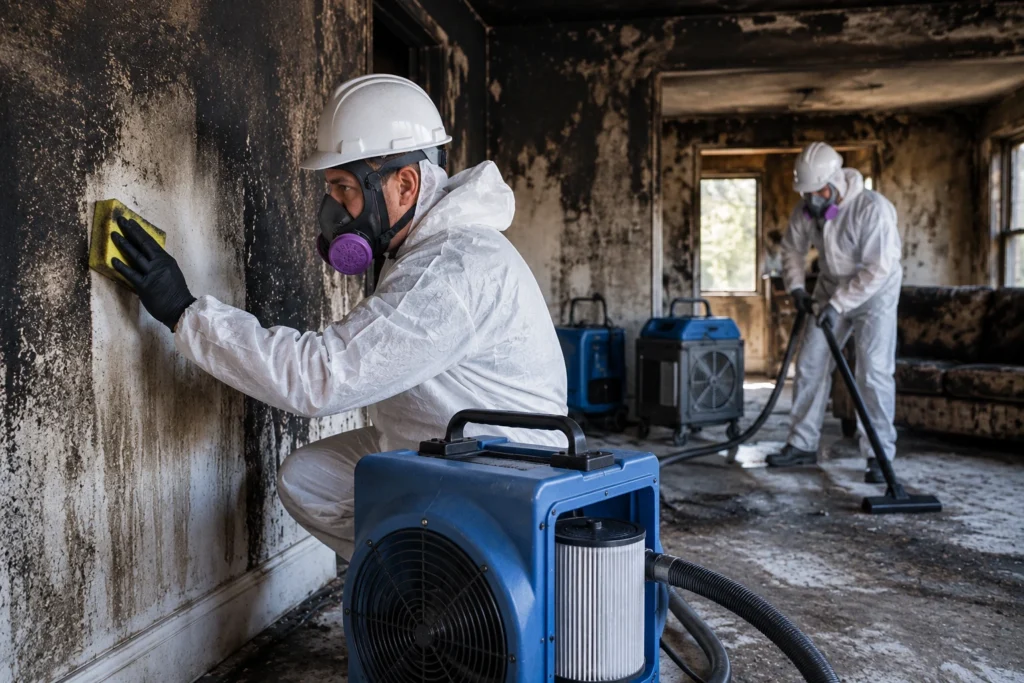
Fire damage is obvious. Burned walls, damaged roofs, and destroyed belongings immediately demand attention. However, soot damage insurance often becomes just as important because the black residue left behind can continue damaging a property long after the flames are gone. Tiny soot particles settle into every corner of a home, affecting surfaces, furniture, electronics, and even the air you breathe. If you own a home in Cedar Hill, understanding how insurance handles soot damage can make the difference between a smooth recovery and an expensive financial burden. Throughout this guide, I’ll walk through the entire claims process so you know exactly what steps to take and how to maximize your settlement.
Recovering from a fire is overwhelming. One moment you’re focused on protecting your family, and the next you’re juggling restoration companies, insurance adjusters, contractors, and endless paperwork. It is easy to assume that visible damage tells the whole story, but soot has a way of hiding where you least expect it. It clings to walls, seeps into insulation, infiltrates HVAC systems, and leaves behind acidic residue that can permanently damage materials if not addressed quickly.
Insurance policies generally provide coverage for soot damage when it results from a covered peril such as a house fire. Yet receiving fair compensation rarely happens automatically. Insurance companies rely heavily on documentation, inspections, and policy language before determining what they will pay. The more informed you are, the stronger your position becomes during the claims process. This guide explains how soot affects your property, what insurance companies typically cover, the mistakes that often reduce claim payouts, and the practical steps you can take to strengthen your case. Instead of feeling lost after a disaster, you’ll have a roadmap for navigating one of the most stressful experiences a homeowner can face.
What Is Soot Damage?
Soot is the fine black residue produced whenever materials burn incompletely. Unlike ordinary dust, soot contains microscopic carbon particles mixed with oils, acids, chemicals, and other combustion byproducts. These particles travel throughout a structure almost immediately after a fire, settling on virtually every exposed surface.
Even a relatively small kitchen fire can create widespread soot contamination. Smoke follows airflow rather than staying confined to one room, allowing soot to spread through open doorways, ventilation systems, and hidden structural cavities. By the time the fire is extinguished, contamination may extend well beyond the area where the flames started. Many homeowners are surprised to discover that soot damage continues developing even after the fire is over. The acidic compounds found in soot begin reacting with metals, plastics, fabrics, wood finishes, and painted surfaces almost immediately. The longer these particles remain in place, the greater the likelihood of staining, discoloration, corrosion, and permanent deterioration.
Understanding How Soot Forms
Whenever organic or synthetic materials burn without complete combustion, soot is created. The exact composition depends on what burned. Wood, plastics, electrical wiring, insulation, furniture, carpeting, and household chemicals all produce different residues.
Higher temperatures may generate finer particles that spread more easily throughout a building. Lower-temperature fires often create thicker, oilier soot that adheres aggressively to surfaces and becomes more difficult to remove. Because every fire behaves differently, restoration professionals first identify the type of soot present before selecting appropriate cleaning methods. Using the wrong cleaning technique may actually worsen the damage rather than eliminate it.
Different Types of Soot
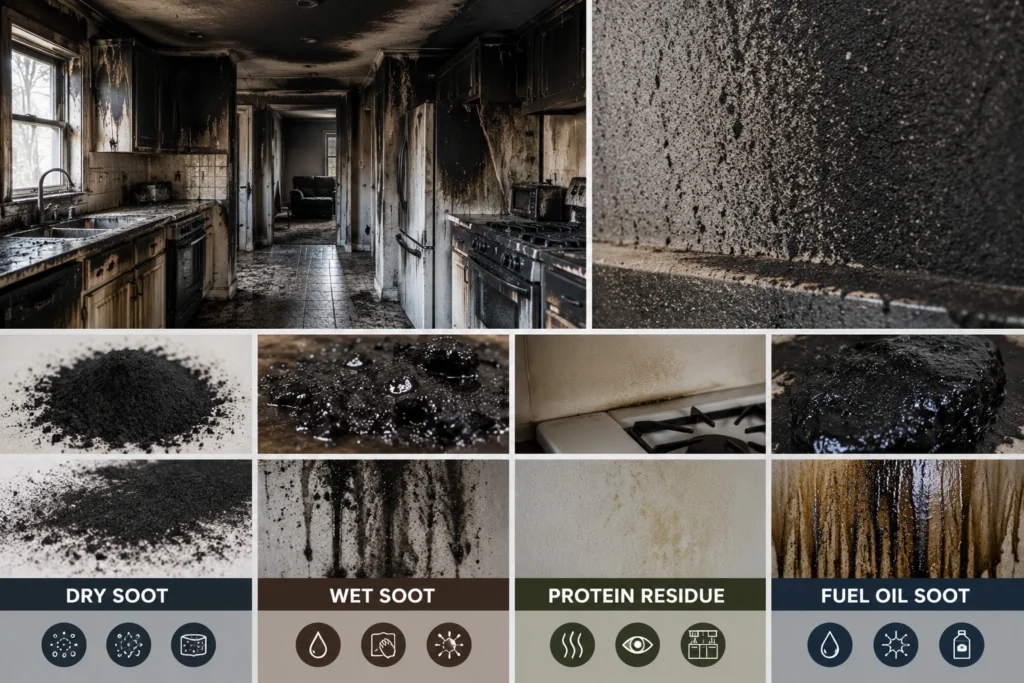
Not all soot behaves the same way. Understanding the differences helps explain why professional restoration companies avoid one-size-fits-all cleaning methods.
Dry Soot
- Produced by fast-burning fires
- Powdery texture
- Easier to remove
- Can still penetrate porous materials
Wet Soot
- Sticky, greasy residue
- Often results from slow-burning fires
- Difficult to clean
- Smears easily when handled improperly
Protein Residue
- Nearly invisible
- Common after kitchen fires
- Produces persistent odors
- Frequently affects painted surfaces and cabinetry
Fuel Oil Soot
- Thick and oily
- Common after furnace malfunctions
- Leaves stubborn stains
- Requires specialized cleaning products
Each variety presents unique restoration challenges. Attempting to clean all soot using household cleaners may spread contamination rather than eliminate it.
Why Every Type Requires Different Cleaning Methods
Professional restoration companies evaluate the characteristics of soot before beginning cleanup. Dry soot often responds well to specialized HEPA vacuum systems and dry-cleaning sponges, while greasy soot typically requires chemical cleaners designed to break down oily residues.
Protein residue presents another challenge altogether because the damage is often invisible. Although walls may appear clean, lingering odors can remain trapped inside porous materials unless deodorization techniques accompany surface cleaning. Selecting the wrong cleaning solution may permanently embed soot into carpeting, upholstery, painted drywall, or unfinished wood. That is why experienced restoration specialists spend considerable time evaluating contamination before recommending a cleaning strategy.
Why Soot Causes More Damage Than Most Homeowners Realize
Many people focus exclusively on burn damage because it is immediately visible. Soot, however, often creates equally serious problems that develop gradually over days and weeks. This delayed destruction catches many homeowners off guard. One of soot’s most damaging characteristics is its acidity. Those microscopic particles are far from harmless dust. Instead, they actively react with surfaces they contact, accelerating deterioration if not removed promptly.
For example, polished metal fixtures may begin tarnishing within hours. Marble countertops can develop permanent etching. Plastic appliances may yellow. Painted walls may discolor, while electronic circuit boards become vulnerable to corrosion. These reactions continue quietly until professional cleaning removes the contaminants. The longer soot remains on surfaces, the more difficult restoration becomes. In severe cases, cleaning alone may no longer be sufficient, requiring complete replacement of affected materials instead.
Areas Commonly Damaged by Soot
Soot rarely limits itself to one room. Air movement allows contamination to spread throughout an entire structure, affecting numerous building components and personal belongings.
Commonly affected areas include:
- Interior walls
- Ceilings
- Hardwood flooring
- Carpet
- Tile grout
- Window treatments
- Kitchen cabinets
- Furniture
- Bedding
- Clothing
- Artwork
- Family photographs
- Electronics
- Appliances
- HVAC ductwork
- Insulation
Many of these items appear unaffected initially. Unfortunately, hidden contamination often becomes apparent only after odors persist or discoloration begins developing weeks later.
How Damage Continues if Cleanup Is Delayed
Time matters after a fire. Every hour soot remains inside a home increases the likelihood of permanent damage.
Consider this progression:
| Time After Fire | Potential Effects |
| Within hours | Metal tarnishing, odor absorption |
| 24–48 hours | Surface discoloration begins |
| Several days | Acidic corrosion accelerates |
| One week | Deep staining becomes harder to remove |
| Several weeks | Permanent damage may require replacement |
Prompt action helps preserve materials that might otherwise become unsalvageable. Equally important, delaying cleanup can affect your insurance claim. If additional damage occurs because reasonable mitigation efforts were not taken, insurers may question whether certain losses resulted from the original fire or from delayed response. Acting quickly protects both your property and your financial recovery.
Does Homeowners Insurance Cover Soot Damage?
In many situations, homeowners insurance covers soot damage when it results from a covered peril, such as a house fire, electrical fire, lightning strike, or another sudden and accidental event. Coverage generally extends beyond the burned area because insurers recognize that smoke and soot can travel throughout an entire structure. Even rooms untouched by flames may qualify for cleaning or repairs if contamination is directly tied to the covered loss.
Every policy is different, however. Some policies contain exclusions, coverage limits, or endorsements that affect what is reimbursed. Before approving payment, the insurer will investigate the cause of the fire, review your policy language, inspect the damage, and determine whether the claimed losses fall within your coverage. Understanding these details early allows you to ask informed questions instead of relying on assumptions. A useful concept to understand is adsorption, the process by which molecules cling to the surface of another material rather than being absorbed inside it. Smoke odors often persist because soot particles adhere to walls, fabrics, and furniture at a microscopic level, making professional cleaning necessary. If you’re interested in the science behind this process.
What Your Soot Damage Insurance Claim May Include
A comprehensive claim often involves much more than repairing burned walls. Soot contamination can affect nearly every part of a property, and a properly prepared claim should account for all related losses.
Coverage may include:
- Structural repairs
- Cleaning walls and ceilings
- Smoke odor removal
- HVAC inspection and cleaning
- Contents restoration
- Replacement of unsalvageable belongings
- Temporary emergency repairs
- Additional Living Expenses (ALE)
- Professional cleaning services
- Debris removal, when applicable
Many homeowners overlook secondary costs that accumulate after a fire. Hotel stays, restaurant meals, laundry services, pet boarding, storage units, and transportation expenses may all be reimbursable if your home cannot be safely occupied during restoration.
Immediate Steps to Take After Discovering Soot Damage
The hours immediately following a fire are critical. While safety always comes first, the decisions you make afterward can significantly influence your insurance claim. Start by ensuring everyone is safe and that the property has been cleared for re-entry by local authorities. Never enter a building that may have structural damage or lingering fire hazards. Next, contact your insurance company as soon as possible to report the loss. Request a claim number and keep a written record of every conversation, including dates, names, and summaries of what was discussed. Good documentation often prevents confusion later in the process.
Before moving or cleaning anything, thoroughly photograph every affected area. Capture wide-angle images of entire rooms as well as close-up photographs showing soot deposits, damaged belongings, stained ceilings, and affected mechanical systems. Video walkthroughs provide valuable context that still images sometimes miss. If emergency measures are necessary to prevent additional damage such as boarding broken windows or placing tarps over exposed roofing keep every receipt. Insurance policies typically require homeowners to take reasonable steps to mitigate further losses, and these expenses are often reimbursable.
Documenting Soot Damage for Your Insurance Claim
Strong documentation transforms a difficult claim into a well-supported one. Insurance adjusters evaluate evidence, not assumptions, so the quality of your records can directly influence the outcome of your settlement.
Create a dedicated claim folder containing photographs, videos, contractor estimates, restoration reports, receipts, correspondence, hotel invoices, temporary repair costs, and notes from every conversation with the insurer. Organizing information from the beginning makes responding to requests much easier.
A personal property inventory is equally important. Walk through each room and list every damaged item, including furniture, electronics, appliances, clothing, artwork, collectibles, kitchen equipment, and sentimental belongings. Include purchase dates, approximate values, model numbers when available, and photographs whenever possible.
| Documentation | Why It Matters |
| Photographs | Demonstrate visible damage before cleanup |
| Videos | Show the overall condition of the property |
| Inventory List | Supports claims for personal belongings |
| Repair Estimates | Helps establish restoration costs |
| Receipts | Documents reimbursable emergency expenses |
| Communication Log | Creates a timeline of claim activity |
Comprehensive documentation also becomes valuable if disagreements arise later. It allows you to demonstrate exactly what the property looked like immediately after the fire and supports requests for additional compensation if hidden soot damage is discovered during restoration.
How Insurance Companies Evaluate Soot Damage Claims
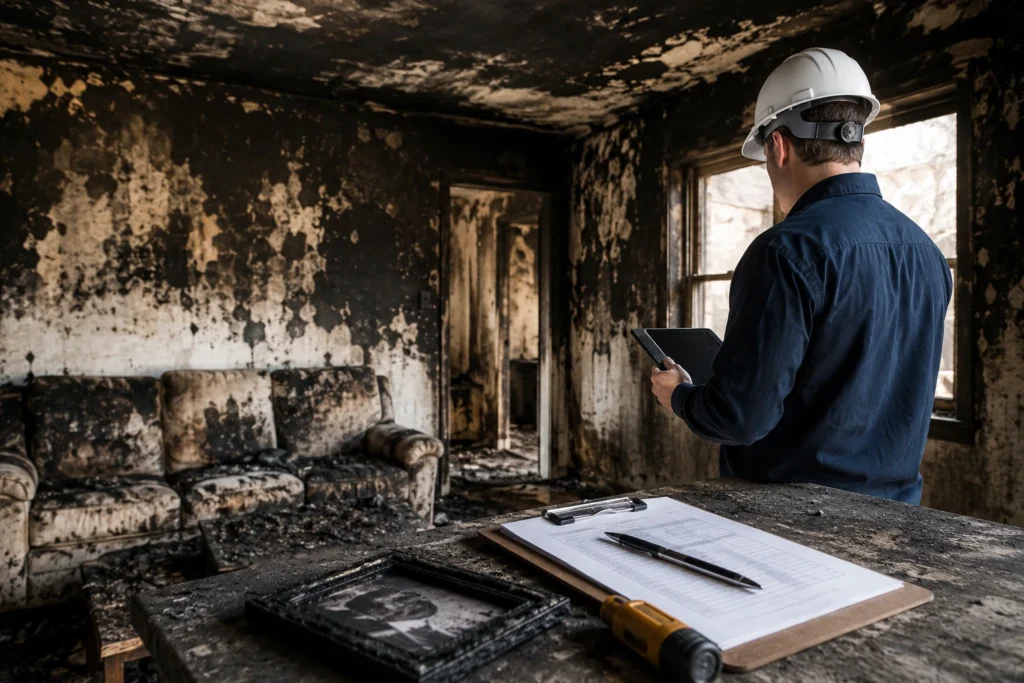
Insurance adjusters rarely rely on visible staining alone. Their evaluation typically includes determining how the fire started, assessing the extent of soot migration, identifying hidden contamination, reviewing contractor estimates, and comparing restoration costs against replacement values.
Many insurers also consult restoration specialists who use specialized equipment to detect contamination inside HVAC systems, insulation, wall cavities, and other concealed areas. These inspections frequently uncover damage that homeowners cannot see during an initial walkthrough. The insurer must also decide whether affected materials can be cleaned successfully or whether replacement is more appropriate. This distinction often becomes one of the most significant factors affecting the final settlement amount.
Common Reasons Soot Damage Insurance Claims Are Underpaid
Unfortunately, not every claim results in full compensation. Some settlements fall short because important damage was overlooked, documentation was incomplete, or restoration needs were underestimated during the initial inspection.
Common reasons for reduced settlements include:
- Hidden soot contamination was not identified.
- HVAC cleaning was omitted from the estimate.
- Personal belongings were undervalued.
- Odor removal requirements were underestimated.
- Repair estimates failed to include specialty cleaning.
- Damage continued because mitigation was delayed.
- Policy language was interpreted differently by the insurer.
This is often the point When Insurance Gets Complicated. Technical policy wording, competing repair estimates, and differing opinions about cleaning versus replacement can create significant disputes. Remaining organized, requesting detailed explanations, and obtaining independent restoration evaluations when necessary can help strengthen your position during negotiations.
Cleaning Soot Damage: Why Professional Restoration Matters
After a fire, it can be tempting to grab a sponge and bucket and start cleaning immediately. I understand the urge. Seeing black residue throughout your home makes you want to take action as quickly as possible. However, soot is far different from everyday dirt, and improper cleaning often makes matters worse. Rubbing soot into painted walls can permanently embed stains. Vacuuming with a standard household vacuum may spread fine particles into the air rather than remove them. Using water on oily soot can smear contamination across larger surfaces, increasing cleanup costs instead of reducing them.
Professional restoration companies use specialized equipment designed specifically for fire damage. High-efficiency particulate air (HEPA) vacuums, dry-cleaning sponges, thermal fogging systems, hydroxyl generators, ozone treatments where appropriate, and advanced deodorization techniques help eliminate contamination while minimizing additional damage. Experienced restoration technicians also understand which materials can realistically be cleaned. Some hardwood flooring, cabinetry, upholstery, and personal belongings respond well to restoration. Others have suffered irreversible damage and should be replaced instead. Making that determination early saves both time and money.
Personal Belongings Frequently Affected by Soot
Homeowners often focus first on structural damage, but personal possessions frequently represent a significant portion of a soot damage insurance claim. Smoke and soot settle on nearly every exposed surface, affecting both expensive valuables and everyday necessities.
Items commonly impacted include:
| Item | Typical Damage |
| Furniture | Surface staining and lingering odors |
| Electronics | Internal contamination and corrosion |
| Clothing | Odor absorption and discoloration |
| Bedding | Embedded smoke particles |
| Curtains | Persistent smoke odor |
| Family photographs | Staining and fading |
| Artwork | Surface contamination |
| Books and documents | Yellowing and odor retention |
| Jewelry | Residue buildup |
| Kitchenware | Fine soot deposits |
Creating a detailed inventory is one of the smartest decisions you can make. Photograph every damaged item before cleaning or disposal, record approximate purchase dates, and gather receipts whenever possible. If receipts are unavailable, bank statements, warranty information, instruction manuals, or previous photographs may help establish ownership and value. Don’t overlook sentimental belongings. While insurance cannot replace family memories, documenting damaged heirlooms, collectibles, or keepsakes allows the insurer to evaluate restoration options that might otherwise be missed.
Hidden Areas Where Soot Often Spreads
One of the biggest misconceptions after a fire is believing that visible soot represents the full extent of the damage. In reality, smoke travels wherever air flows, carrying microscopic particles into areas that homeowners rarely inspect.
Hidden contamination frequently appears in:
- HVAC ducts
- Air vents
- Attics
- Crawl spaces
- Wall cavities
- Ceiling voids
- Insulation
- Inside cabinets and closets
- Behind appliances
- Around electrical outlets
These hidden deposits can continue producing odors long after visible surfaces have been cleaned. In some cases, every time the heating or cooling system turns on, trapped soot particles circulate back into the home’s living spaces. Professional inspections often include examining these concealed areas to determine whether additional cleaning or replacement is necessary. Skipping this step may leave contamination behind that continues affecting indoor air quality and creating unpleasant odors.
Mistakes That Can Hurt Your Soot Damage Insurance Claim
Even legitimate insurance claims can encounter unnecessary delays or reduced settlements when avoidable mistakes occur. Staying organized and thinking ahead can prevent many common problems.
Avoid these mistakes whenever possible:
- Throwing away damaged belongings before they are documented.
- Cleaning heavily contaminated areas before photographs are taken.
- Missing deadlines for submitting requested information.
- Failing to keep receipts for temporary repairs or living expenses.
- Accepting the first settlement offer without reviewing it carefully.
- Assuming hidden damage does not exist simply because it cannot be seen.
- Forgetting to update your insurer as new damage is discovered.
Another common error involves underestimating the scope of soot damage. Homeowners sometimes focus only on obvious repairs while overlooking odor removal, duct cleaning, contents restoration, and long-term corrosion risks. A comprehensive claim should account for every covered loss related to the fire.
When You Should Consider Hiring a Public Adjuster
Not every insurance claim requires professional representation. Smaller losses with straightforward damage may progress smoothly through the standard claims process. Larger or more complex losses, however, often benefit from experienced assistance. A public adjuster represents the policyholder rather than the insurance company. Their role includes reviewing the insurance policy, documenting all covered damage, preparing detailed estimates, coordinating supporting evidence, and negotiating directly with the insurer.
You may want to consider hiring a public adjuster if:
- The fire caused extensive structural damage.
- The insurer disputes the scope of soot contamination.
- Hidden damage continues appearing during restoration.
- Your claim has been delayed without explanation.
- You received a settlement that seems significantly lower than expected.
- Your claim was denied and you believe coverage should apply.
An experienced public adjuster understands how to identify losses that might otherwise be overlooked. They often work closely with restoration contractors, engineers, and contents specialists to develop a complete picture of the damage before negotiations begin.
Why Local Experience Matters After Fire Damage
Insurance claims do not happen in a vacuum. Local labor rates, contractor availability, municipal building requirements, and regional construction costs all influence repair estimates and settlement values. For homeowners in Cedar Hill, working with professionals who understand the local market can make the restoration process more efficient. They are familiar with regional building practices, common property types, permitting requirements, and the restoration resources available throughout the area.
Local experience also improves communication. Restoration contractors, inspectors, and claim professionals who regularly handle losses in the community often coordinate more effectively, helping projects move forward with fewer unnecessary delays.
Tips for Maximizing Your Soot Damage Insurance Settlement
Although every claim is different, several proven practices consistently improve the chances of receiving a fair settlement.
Keep these strategies in mind:
- Report the loss immediately.
- Document everything before cleanup begins.
- Take photographs from multiple angles.
- Record video walkthroughs of every affected room.
- Keep every receipt related to the loss.
- Maintain a written communication log.
- Obtain detailed restoration estimates.
- Review your insurance policy carefully.
- Don’t rush into accepting the first settlement offer.
- Ask questions whenever coverage decisions seem unclear.
Organization is one of your greatest advantages. The more complete your records, the easier it becomes to demonstrate the full extent of your losses and support reimbursement requests. Patience also matters. While everyone wants repairs completed quickly, taking the time to fully document damage before restoration begins often prevents disagreements later in the claims process.
Final Thoughts
Recovering from a fire involves far more than repairing burned materials. Soot can quietly affect nearly every room in a home, damaging surfaces, belongings, electronics, HVAC systems, and even indoor air quality. Because much of this contamination is invisible at first glance, understanding soot damage insurance is essential for protecting both your property and your financial recovery. By acting quickly, documenting every loss thoroughly, keeping organized records, and working with qualified restoration professionals, you’ll place yourself in a much stronger position during the insurance claim process. Every photograph, receipt, inspection report, and written communication helps tell the complete story of your loss.
If your property has experienced extensive smoke and soot contamination, don’t assume the initial insurance estimate reflects the full scope of the damage. Take the time to understand your policy, ask questions, and seek professional guidance when necessary. For homeowners in Cedar Hill, a well-prepared claim can make the recovery process smoother, reduce unnecessary stress, and improve the likelihood of receiving the settlement needed to restore your home with confidence.
FAQs
Soot damage insurance refers to the coverage provided by your homeowners insurance policy for soot and smoke damage caused by a covered event, such as a fire.
Not always. Coverage depends on the cause of the damage, your policy terms, exclusions, and whether the fire resulted from a covered peril.
You should notify your insurance company as soon as possible after the fire. Prompt reporting helps prevent delays and preserves important evidence.
It’s best to avoid major cleaning until you’ve documented the damage with photos and videos. Cleaning too soon may make it harder to prove the extent of your losses.
Take clear photos and videos of all affected areas, create an inventory of damaged belongings, save receipts, and keep copies of repair estimates and communications with your insurer.
If the soot and smoke damage resulted from a covered loss, many policies include coverage for professional deodorization and odor removal services.
Yes. Fine soot particles can enter electronic devices, causing corrosion and reducing their lifespan, even if they appear to function normally.
Review the insurer’s estimate carefully and request an explanation. If necessary, obtain an independent inspection or consult a public adjuster to evaluate your claim.
The timeline varies depending on the severity of the damage, the complexity of the claim, and how quickly documentation and inspections are completed. Simple claims may take weeks, while larger losses can take several months.
Consider hiring a public adjuster if your claim is large, disputed, delayed, underpaid, or involves extensive soot contamination that requires detailed documentation and negotiation.