

A house fire changes everything in a matter of minutes. Beyond the visible destruction, families often face the unexpected challenge of finding a safe place to live while repairs are underway. That is where Additional Living Expenses After a Fire become incredibly important. This part of a homeowners insurance policy helps cover the extra costs of maintaining a normal lifestyle when a covered fire makes your home uninhabitable. For homeowners in Cedar Hill, understanding this coverage before disaster strikes can make an overwhelming situation much easier to manage.
A fire claim is about much more than replacing walls, flooring, and furniture. Once emergency responders leave and the smoke clears, everyday life continues. Children still need to attend school, adults still need to commute to work, pets require care, and meals still have to be prepared. Those routine expenses often become significantly more expensive after a fire, making Additional Living Expenses coverage one of the most valuable protections within a homeowners insurance policy.
Unfortunately, many homeowners only discover how Additional Living Expenses coverage works after they have already been displaced. At that point, every decision carries financial consequences. Choosing temporary housing, paying for restaurant meals, arranging storage, and covering transportation costs can quickly strain even a healthy budget if you are unsure what your insurance policy will reimburse. The good news is that understanding this coverage before or during the claims process helps you make smarter decisions. Knowing which expenses qualify, how reimbursements are calculated, and what documentation insurers expect can prevent unnecessary disputes while allowing you to focus on rebuilding your home and restoring your family’s routine.
What Are Additional Living Expenses (ALE)?
Additional Living Expenses, often shortened to ALE, are benefits included in many homeowners insurance policies under what is commonly called “Loss of Use” coverage. Their purpose is simple: reimburse policyholders for the reasonable increase in living expenses when a covered event, such as a fire, forces them to leave their home during repairs or reconstruction. Think of ALE as a financial bridge rather than a replacement income source. It is designed to help maintain your normal standard of living not improve it. If your ordinary monthly grocery bill increases because you must eat at restaurants while staying in a hotel, the difference between your usual food costs and the higher temporary expenses may qualify for reimbursement.
One of the biggest misunderstandings involves assuming that every expense during displacement is automatically covered. Insurance companies generally reimburse only the extra costs created by the loss. Normal household bills that you would have paid regardless of the fire usually remain your responsibility. Understanding that distinction early can prevent frustration later in the claims process. Coverage details vary between policies. Some plans provide generous limits and extended periods of reimbursement, while others include strict monetary caps or time restrictions. Reading the policy carefully or reviewing it with a professional can reveal important details that affect your recovery after a fire.
When Does Additional Living Expenses Coverage Begin?
Coverage generally begins once a covered fire makes your residence unsafe or unsuitable for normal occupancy. The key factor is habitability. If smoke contamination, structural damage, utility interruptions, or safety hazards prevent you from living safely in the home, Additional Living Expenses benefits may begin immediately. Not every fire results in complete destruction. In many cases, relatively small fires create extensive smoke damage, water damage from firefighting efforts, or electrical hazards that require occupants to leave temporarily. Even though portions of the home remain standing, the property may still be considered uninhabitable until repairs restore safe living conditions.
Insurance companies often rely on several sources when determining whether a home can still be occupied. Fire officials, building inspectors, restoration contractors, structural engineers, and insurance adjusters may all contribute information about the property’s condition. Their evaluations help establish when ALE benefits should begin and when they eventually end. Temporary evacuations can also qualify under certain circumstances. For example, if emergency services prohibit entry while hazardous materials are removed or structural risks are addressed, homeowners may receive reimbursement for necessary lodging until it is safe to return. The specific facts surrounding the loss and the language within the insurance policy ultimately determine eligibility.
Even when the damage extends beyond the living space, secondary issues can influence coverage decisions. A severely compromised roof may allow rainwater to enter the property after the fire, creating additional concerns that delay occupancy. In these situations, consulting a Roof Damage Public Adjuster can help homeowners document the full extent of the damage and ensure that related repair issues are properly evaluated alongside the fire claim.
Expenses Commonly Covered After a Fire
Once a family must relocate, daily costs often increase almost immediately. Additional Living Expenses coverage exists to absorb many of those unexpected financial burdens so homeowners are not forced to shoulder them alone while waiting for repairs to finish. One of the most common covered expenses is temporary lodging. During the first few days after a fire, many families stay in hotels because they provide immediate shelter with minimal planning. As reconstruction timelines become clearer, insurance companies may instead reimburse the cost of renting an apartment, condominium, or furnished home that better matches the family’s long-term needs.
Food expenses also change dramatically after displacement. Without access to a functioning kitchen, grocery shopping often gives way to restaurant meals, takeout, or prepared foods. While insurers generally will not pay the entire restaurant bill, they frequently reimburse the additional amount spent beyond a household’s normal grocery budget. Careful tracking of food expenses makes these reimbursements easier to calculate and support. Transportation expenses may also increase. Living farther from work, school, medical appointments, or childcare facilities often leads to higher fuel costs, parking fees, tolls, or public transportation expenses. If these additional costs directly result from the temporary relocation, they may qualify under Additional Living Expenses coverage depending on the terms of the policy.
Likewise, homeowners may incur expenses that never existed before the fire. Storage facilities for salvaged belongings, temporary furniture rentals, laundry services when no washer and dryer are available, pet boarding, utility connection fees, and moving services can all become necessary parts of daily life during the recovery process. Although every claim differs, maintaining detailed receipts and organized records greatly improves the likelihood of receiving timely reimbursement for eligible costs.
Expenses That Usually Are Not Covered
Although Additional Living Expenses coverage is broad, it has clear boundaries. Insurance policies generally pay only for the increase in costs caused by the fire rather than every bill that arrives while you are displaced. Understanding these limitations helps you plan realistically and reduces the chance of unpleasant surprises during the claims process. For example, your monthly mortgage payment does not disappear simply because your home cannot be occupied. The same is true for loan payments, credit card bills, subscription services, and many other regular financial obligations that existed before the fire. These expenses are considered part of your normal cost of living rather than additional costs created by the loss.
Luxury choices can also create reimbursement issues. Suppose your home had three bedrooms and modest amenities before the fire. Renting an upscale vacation property with premium features may exceed what the insurer considers reasonable. The goal of Additional Living Expenses After a Fire is to maintain a comparable lifestyle not significantly upgrade it. Likewise, personal shopping unrelated to the displacement usually falls outside ALE coverage. Buying new clothing because you enjoy shopping is very different from replacing essential clothing that was destroyed in the fire and not immediately available through other portions of your insurance claim. Understanding the difference between convenience and necessity is essential.
Understanding “Necessary Increase in Living Expenses”
The phrase “necessary increase in living expenses” appears in many homeowners insurance policies, and it carries enormous importance. It means your insurer compares your normal household expenses with your temporary expenses after the fire. Only the additional amount is generally eligible for reimbursement.
Imagine your family normally spends $900 each month on groceries. Because you are staying in a hotel without a kitchen, your food costs rise to $1,600 due to restaurant meals and takeout. Rather than reimbursing the full $1,600, the insurance company may reimburse the $700 increase because that represents the additional expense directly caused by the fire. This principle applies across many categories of living costs. It encourages homeowners to make practical decisions while ensuring they are not financially punished for circumstances beyond their control. Keeping prior bank statements, grocery receipts, utility bills, and monthly budgets can make these comparisons much easier during the claims process.
How Long Does Additional Living Expenses Coverage Last?
One of the first questions many homeowners ask is, “How long will the insurance company continue paying?” The answer depends on both the policy language and the time reasonably required to restore the home after a covered loss. Most policies continue ALE benefits until the property is repaired, rebuilt, or replaced, provided the work progresses within a reasonable timeframe. However, insurance contracts often include maximum payment periods or dollar limits. Some policies may provide benefits for twelve months, while others extend coverage to twenty-four months or longer depending on the terms purchased.
Delays can complicate matters. Material shortages, contractor scheduling conflicts, permit approvals, or hidden structural damage frequently extend repair timelines. Even though these issues are often outside the homeowner’s control, documenting every delay and maintaining regular communication with the insurance company helps demonstrate why Additional Living Expenses should continue until the home is genuinely ready for occupancy.
Recovery after a fire can involve surprisingly complex technical challenges. For example, restoration professionals may encounter issues involving thermodynamics when evaluating how extreme heat affected structural materials, insulation, or mechanical systems. While homeowners do not need to master these engineering concepts, understanding that fire damage extends beyond visible burn marks helps explain why thorough inspections and repairs often take longer than expected.
Sample ALE Calculation
The following example illustrates how insurers commonly evaluate increased living expenses after a covered fire:
| Expense Category | Normal Monthly Cost | Temporary Monthly Cost | Potential ALE Reimbursement |
| Housing | $1,800 | $2,450 | $650 |
| Groceries & Meals | $900 | $1,600 | $700 |
| Transportation | $250 | $420 | $170 |
| Laundry | $20 | $95 | $75 |
| Pet Boarding | $0 | $280 | $280 |
| Storage Unit | $0 | $175 | $175 |
This simplified example shows an important principle: reimbursement focuses on the difference between your ordinary expenses and the additional costs created by the fire. Maintaining accurate financial records before and after the loss allows you to demonstrate those differences clearly, making the review process smoother and strengthening your claim for Additional Living Expenses After a Fire.
Documentation You Need for Reimbursement
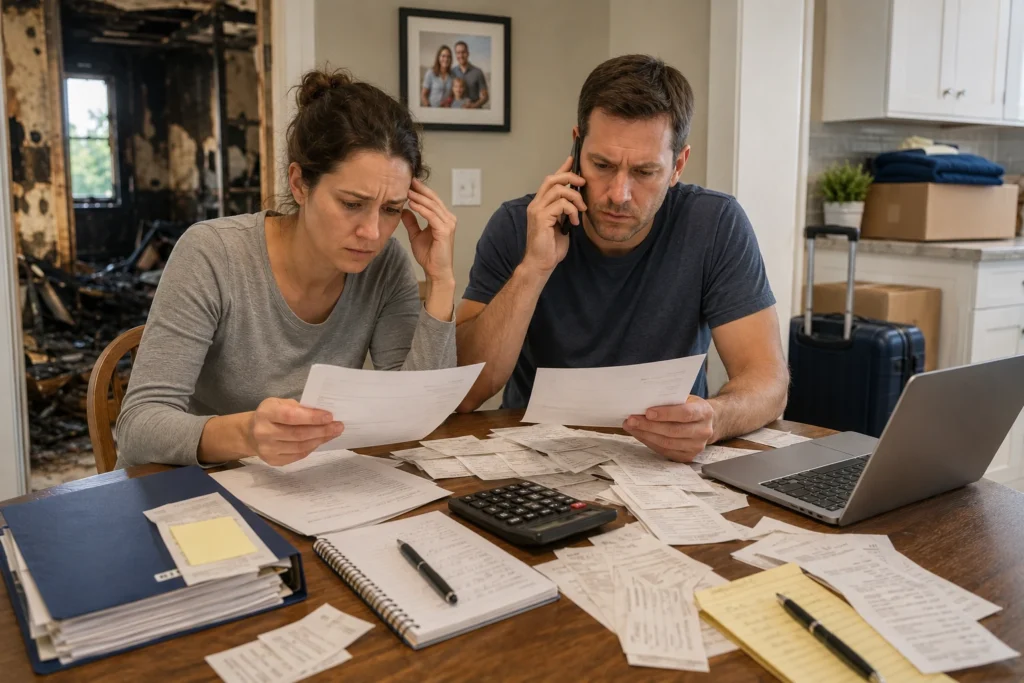
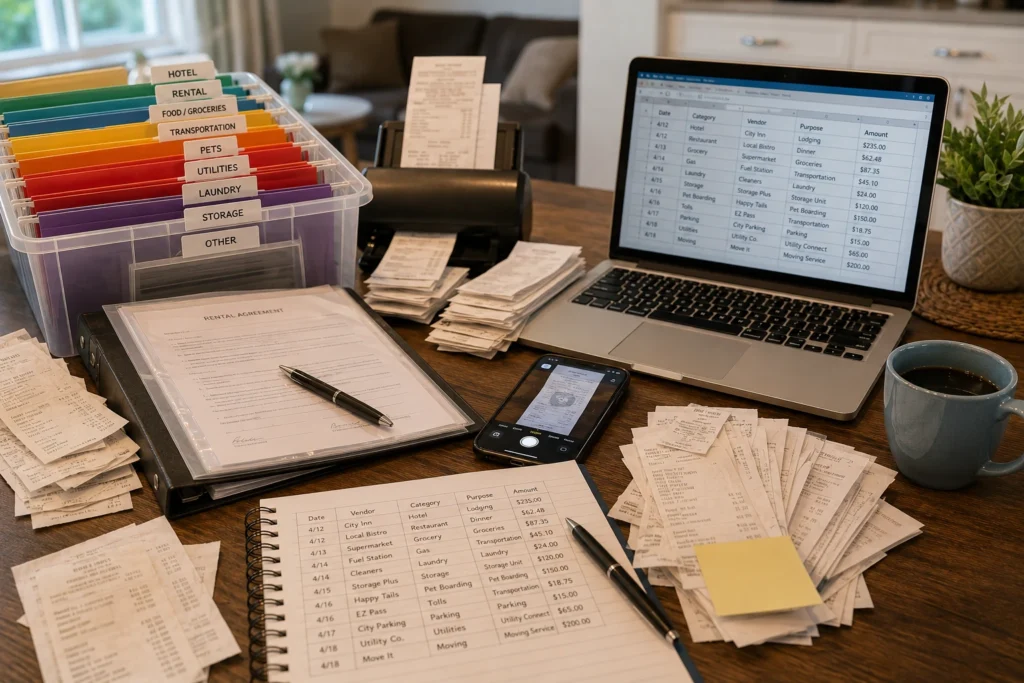
Strong documentation can make the difference between a smooth reimbursement process and weeks of unnecessary delays. Insurance companies rely on evidence, not estimates. The more organized your records are, the easier it becomes to demonstrate that each expense directly resulted from your displacement after the fire. Start by creating a dedicated folder either digital, physical, or both for every document related to your claim. Save receipts immediately instead of assuming you’ll remember where they are later. Small purchases can add up quickly, and even seemingly minor expenses may qualify for reimbursement.
Keep records such as:
- Hotel invoices
- Apartment or rental agreements
- Restaurant receipts
- Grocery receipts
- Utility connection fees
- Laundry expenses
- Storage unit contracts
- Pet boarding invoices
- Fuel receipts
- Parking fees
- Toll expenses
- Moving company invoices
Digital copies provide an extra layer of protection. Scan paper receipts or photograph them with your phone before the ink fades. Organize files by date and expense category so they can be produced quickly if your insurance company requests additional information. It is also wise to maintain a simple expense log. Record the date, amount, vendor, purpose of the purchase, and how it relates to your temporary relocation. This running record helps refresh your memory weeks or months later and provides valuable context for adjusters reviewing dozens of receipts.
Common Mistakes That Delay ALE Payments
Most payment delays are avoidable. Homeowners are often overwhelmed after a fire, making it understandable that paperwork may not receive immediate attention. However, taking a few extra minutes to stay organized can save considerable frustration later. One common mistake is failing to notify the insurance company promptly after relocating. If the insurer does not know where you are staying or what expenses you are incurring, reimbursement may be delayed while additional information is gathered.
Another frequent issue involves discarding receipts. Some homeowners assume credit card statements are enough, but detailed receipts often explain exactly what was purchased. Without them, insurers may question whether an expense qualifies under Additional Living Expenses After a Fire. Choosing accommodations that greatly exceed your previous standard of living can also create disputes. While comfort is important, insurers generally expect temporary housing to be reasonable based on your family’s needs rather than luxury preferences.
Poor communication is another obstacle. If your temporary housing changes, your repair timeline shifts, or unexpected expenses arise, notify your adjuster as soon as possible. Keeping everyone informed helps prevent misunderstandings that could interrupt reimbursements. Finally, avoid assuming every extra purchase is covered. Ask questions before making large financial commitments. Clarifying coverage in advance is far easier than disputing a denied reimbursement afterward.
Tips for Maximizing Your Additional Living Expense Claim
Recovering financially after a fire requires more than simply submitting receipts. A thoughtful approach can help ensure you receive every dollar available under your policy while reducing unnecessary delays. Begin by reading your homeowners insurance policy carefully. Focus on the Loss of Use or Additional Living Expenses section. Understanding coverage limits, exclusions, reimbursement procedures, and time restrictions allows you to make informed decisions from the very beginning.
Communicate consistently with your insurance adjuster. Regular updates establish transparency and demonstrate that you are acting responsibly throughout the claim. If circumstances change, provide documentation immediately rather than waiting until the next scheduled conversation. Keep every receipt even if you’re unsure whether it qualifies. It is much easier to submit an expense for review than to recreate documentation weeks later. Small expenses accumulated over several months can represent hundreds or even thousands of dollars.
Request advance payments when appropriate. Large hotel bills or rental deposits often require significant cash upfront. Many insurers will issue advances against expected Additional Living Expenses benefits, helping homeowners avoid unnecessary financial hardship while the claim progresses. Create a weekly review routine. Set aside time to organize receipts, reconcile your expense log, compare reimbursements received, and identify any missing payments. Staying ahead of the paperwork prevents a last-minute scramble when documentation is requested.
Challenges Homeowners Often Face
Even with solid insurance coverage, fire claims rarely proceed without obstacles. Every property is different, every policy contains unique language, and every claim develops its own set of challenges. Delayed reimbursements are among the most common frustrations. Large claims require detailed reviews, and missing documentation can slow the process even further. Homeowners who depend on reimbursement to cover ongoing housing costs may experience significant financial stress while waiting for payments.
Disagreements over temporary housing costs also arise frequently. An insurer may believe a less expensive rental is sufficient, while the homeowner believes a larger property is necessary to accommodate the family’s size, medical needs, pets, or work requirements. These differences often require careful documentation and negotiation. Coverage limit disputes create additional complications. Some homeowners assume Additional Living Expenses continue indefinitely until repairs finish. In reality, many policies impose maximum dollar amounts or time limits regardless of reconstruction progress. Understanding those limits early helps families plan for potential financial gaps.
Repair delays outside the homeowner’s control present another challenge. Building permit backlogs, contractor shortages, supply chain disruptions, and hidden structural damage can all extend reconstruction timelines. Maintaining thorough documentation of these delays helps demonstrate that the extended displacement is reasonable rather than avoidable.
How a Public Adjuster Can Help With ALE Claims
Insurance adjusters employed by insurance companies work to evaluate claims on behalf of the insurer. A public adjuster, however, represents the policyholder. That difference can become especially valuable when questions arise regarding Additional Living Expenses, reimbursement amounts, or policy interpretation. A public adjuster begins by reviewing the homeowners insurance policy in detail. They identify applicable coverages, explain reimbursement procedures, and determine whether additional benefits may be available beyond what the homeowner initially understood.
Documentation is another major area where professional assistance can make a difference. Public adjusters help organize receipts, prepare expense summaries, assemble supporting evidence, and present the information in a clear format that facilitates review by the insurance company. Negotiation is often where homeowners benefit the most. If certain expenses are denied, reduced, or questioned, a public adjuster can present supporting documentation, explain why the expenses were necessary, and advocate for a fair resolution based on the policy language.
Throughout the process, they also monitor payment schedules and communicate with insurers regarding outstanding reimbursements. This ongoing oversight allows homeowners to focus more of their attention on rebuilding their lives rather than managing every administrative detail associated with a complex insurance claim. For many families in Cedar Hill, having experienced representation during a major fire loss provides additional confidence during an already stressful recovery.
Additional Living Expenses Checklist
When a fire forces you from your home, taking organized action immediately can improve both your financial recovery and your peace of mind.
Immediately After the Fire
- Notify your insurance company.
- Obtain a claim number.
- Confirm whether your home is safe to occupy.
- Secure temporary housing.
During Your Temporary Relocation
- Save every receipt.
- Photograph all damaged property.
- Track fuel and mileage if travel increases.
- Keep copies of hotel and rental invoices.
- Record utility setup fees.
- Maintain an organized expense log.
- Store digital backups of all documents.
Throughout the Repair Process
- Review reimbursements regularly.
- Compare payments against submitted expenses.
- Follow up promptly on outstanding reimbursements.
- Document construction delays.
- Stay in regular contact with your adjuster.
- Review remaining policy limits periodically.
Taking these simple steps creates a stronger foundation for your insurance claim and reduces the likelihood of overlooked reimbursements.
Conclusion
Recovering from a house fire is never easy. The emotional impact is significant, and the financial consequences can continue for months while repairs are completed. Fortunately, Additional Living Expenses After a Fire provide valuable financial protection by helping cover the increased costs of temporary housing, meals, transportation, storage, and other necessary expenses that arise when your home becomes uninhabitable.
Understanding how this coverage works before you need it allows you to make informed decisions under difficult circumstances. Careful documentation, organized recordkeeping, consistent communication, and a thorough understanding of your insurance policy all contribute to a smoother claims process. Rather than reacting to unexpected financial surprises, you can approach recovery with greater confidence and control.
If questions arise regarding eligibility, reimbursement amounts, or policy interpretation, seeking professional guidance can help ensure your claim receives the careful attention it deserves. Whether you’re beginning the recovery process or facing challenges during an ongoing claim, homeowners in Cedar Hill who understand their rights and responsibilities are in a far stronger position to recover fully and move forward with confidence.
FAQs
Additional Living Expenses After a Fire are the extra costs you incur when a covered fire makes your home uninhabitable, helping maintain your normal standard of living during repairs.
Most standard homeowners insurance policies include ALE coverage, but the amount, duration, and covered expenses vary by policy.
Yes. If your home is unsafe to occupy due to a covered fire, reasonable hotel costs are typically eligible for reimbursement.
Insurance usually covers the additional cost of meals beyond what you would normally spend on groceries while displaced.
No. Your regular mortgage or rent payments are generally not considered additional expenses and usually remain your responsibility.
ALE benefits generally continue until your home is repaired or rebuilt, or until your policy’s time or dollar limit is reached.
Yes. Keeping detailed receipts and records is one of the best ways to support your reimbursement request and avoid payment delays.
They often are if they are necessary because you cannot safely live in your home, subject to your policy’s terms and limits.
You can request an explanation, provide additional documentation, and, if necessary, seek assistance from a public adjuster to review the claim.
Yes. A public adjuster can review your policy, organize documentation, negotiate with the insurer, and help maximize eligible ALE reimbursements.