
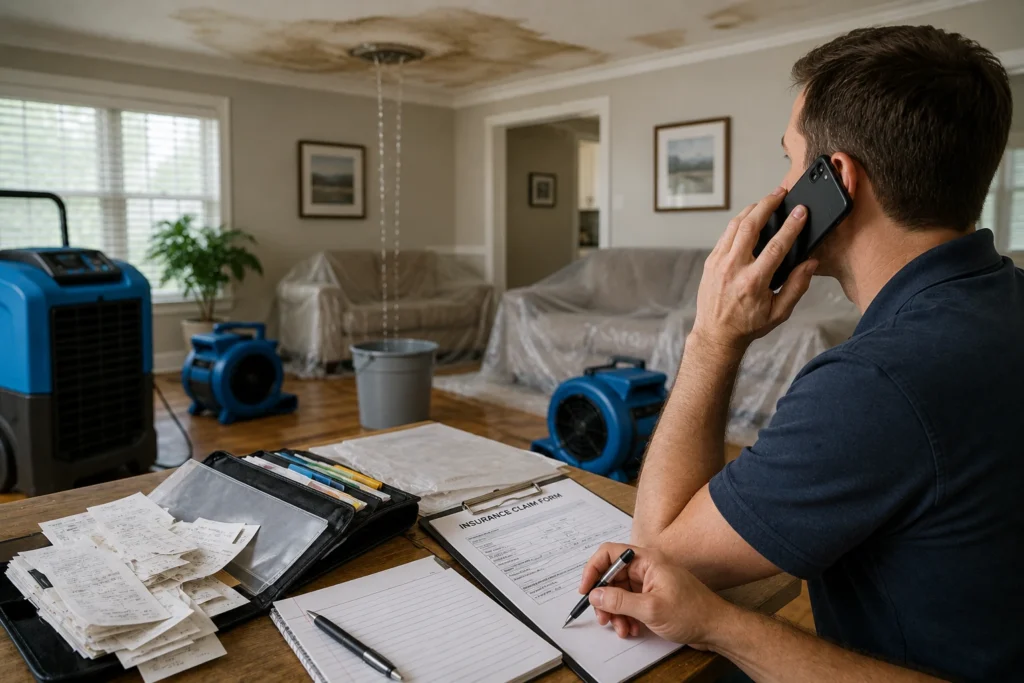
A small drip from your air conditioner might not seem urgent, but it can quickly turn into a costly repair project. Water quietly travels through ceilings, walls, insulation, and flooring long before visible stains appear. By the time many homeowners notice the problem, the damage has already spread well beyond the source. Understanding AC Leak Water Damage Claims early can help you protect your property, document losses properly, and improve your chances of receiving a fair insurance settlement. Air conditioners work hard for much of the year, especially in warm climates where cooling systems rarely get an extended break. During normal operation, moisture naturally forms as warm indoor air passes over the evaporator coil. That moisture should safely drain away through a condensate line. However, when something interrupts that process, water can overflow into areas that were never designed to get wet.
Unfortunately, hidden water is one of the most destructive problems a homeowner can face. Unlike burst pipes that often announce themselves immediately, an AC leak can continue unnoticed for days or even weeks. Moisture slowly saturates drywall, weakens framing, damages insulation, and creates favorable conditions for mold growth. Repair costs can escalate surprisingly fast, even when the original leak appears minor. Insurance coverage often adds another layer of complexity. Some losses are covered because they result from a sudden and accidental event, while others may be excluded if the insurer determines the damage developed gradually or resulted from poor maintenance. Knowing the difference before filing a claim allows you to gather stronger documentation and avoid common mistakes that delay the process.
The good news is that homeowners have more control than they may realize. Taking quick action, documenting every stage of the damage, and understanding how insurers evaluate water losses can significantly influence the outcome of a claim. Rather than reacting emotionally after discovering water damage, approaching the situation methodically often produces better results. Although this guide focuses on AC Leak Water Damage Claims, many of the same documentation principles apply when working with a Fire Insurance Adjuster after other types of property losses. Regardless of the cause, detailed records, prompt mitigation, and thorough inspections frequently become the foundation of a successful insurance claim.
What Causes an Air Conditioner to Leak Water?
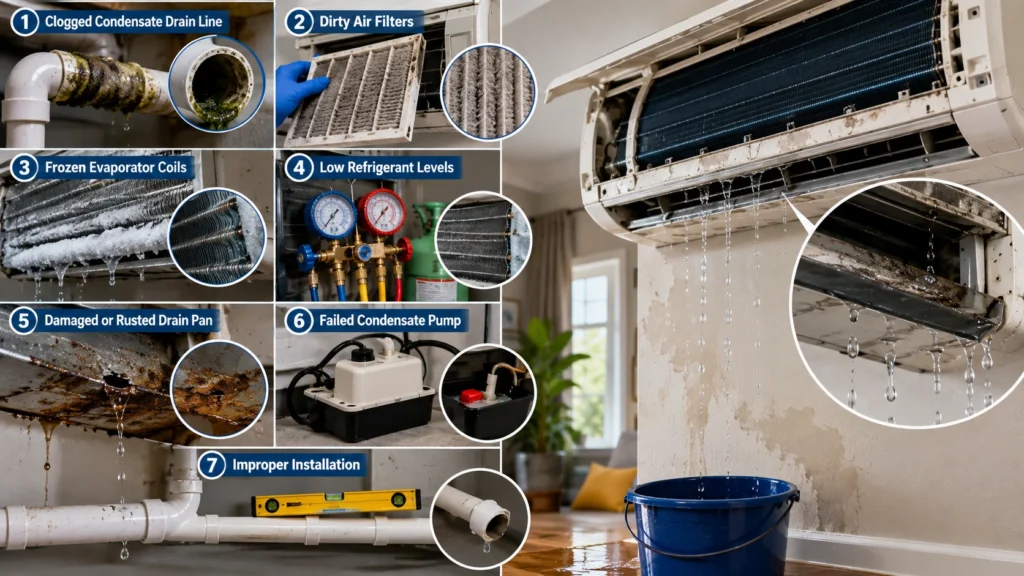
Water leaking from an air conditioner rarely happens without warning. In most cases, the system has been developing a problem for some time before water finally appears inside the home. Understanding the most common causes not only helps prevent future issues but also provides useful context when discussing the loss with insurance adjusters or restoration professionals.
Clogged Condensate Drain Line
The condensate drain line carries moisture collected during the cooling process safely outside the home. Dust, algae, mold, and debris gradually build inside the pipe, eventually restricting water flow. Once the blockage becomes severe enough, the drain pan begins filling until water spills over its edges. Many homeowners never inspect this drain because it remains hidden inside utility closets, attics, or mechanical rooms. Regular maintenance, however, can dramatically reduce the likelihood of unexpected overflows.
Dirty Air Filter and Frozen Evaporator Coil
Something as simple as a neglected air filter can create an entirely different chain of events. Restricted airflow causes the evaporator coil to become excessively cold. Moisture freezes across the coil instead of draining normally. Later, when the ice melts, the sudden volume of water can overwhelm the drain pan, leading to leaks that appear without any obvious explanation. Replacing filters on schedule is one of the easiest and least expensive preventive measures any homeowner can take.
Low Refrigerant Levels
Low refrigerant creates symptoms similar to dirty filters by allowing evaporator coils to become unusually cold. Ice forms gradually during operation before melting after the system cycles off. The resulting water often exceeds what the drainage system was designed to handle. Instead of flowing safely outside, excess water escapes into ceilings, walls, or flooring below the air handler.
Damaged Drain Pan
Older HVAC systems frequently develop rusted or cracked drain pans after years of continuous moisture exposure. Even tiny cracks allow water to escape each time the system operates. Since these leaks develop slowly, homeowners may not notice them until ceiling stains, peeling paint, or warped flooring finally appear.
Failed Condensate Pump
Some homes rely on condensate pumps because gravity alone cannot move water outside. When these pumps fail, water has nowhere to go. Instead, it backs up into the drain pan before overflowing into nearby building materials. Fortunately, replacement pumps are relatively inexpensive compared to repairing widespread water damage.
Improper Installation
Not every AC leak stems from equipment failure. Poor installation practices can leave drain lines improperly sloped, loose fittings unsecured, or drain pans sitting unevenly. These issues may not become noticeable until months or even years after installation. Professional installation and periodic inspections help identify these hidden defects before they evolve into expensive repairs.
Why Small Leaks Become Major Problems
Water has an incredible ability to travel. A leak beginning inside an attic air handler may eventually appear twenty feet away in an entirely different room. Gravity pulls moisture downward while insulation, framing, drywall, and flooring absorb water along the way. The visible stain on the ceiling often represents only a fraction of the total affected area.
Even worse, many construction materials retain moisture long after surface water disappears. Drywall acts almost like a sponge, while wood framing absorbs water deep within its fibers. Unless specialized drying equipment removes that moisture promptly, deterioration continues behind finished surfaces. Another concern involves indoor air quality. Persistent moisture encourages microbial growth inside wall cavities, beneath flooring, and within insulation. Once colonies become established, remediation costs can rise substantially beyond the original water damage repairs.
Electrical components present additional risks. Water entering junction boxes, recessed lighting fixtures, wiring pathways, or electrical panels may create corrosion that isn’t immediately visible. Although everything may continue functioning initially, hidden deterioration can lead to expensive electrical repairs later. One overlooked leak can affect multiple systems throughout a home. Structural repairs, flooring replacement, insulation removal, drywall restoration, repainting, electrical inspections, HVAC servicing, and mold remediation may all become necessary depending on how long the leak remained active. That is why immediate action matters. Stopping the leak quickly often limits secondary damage, preserves more of the home’s original materials, and strengthens the overall documentation needed for AC Leak Water Damage Claims.
How Water From an AC Leak Can Damage Your Home
Water rarely stays where it starts. Once an air conditioner begins leaking, moisture follows the path of least resistance, soaking into building materials and spreading behind finished surfaces. What begins as a damp ceiling tile can eventually affect multiple rooms, requiring repairs far beyond the original source of the problem. Understanding the full extent of possible damage helps homeowners appreciate why thorough inspections are so important during AC Leak Water Damage Claims.
Ceilings
Ceilings are often the first place homeowners notice trouble. Brown or yellow stains may appear around air vents, recessed lighting, or directly beneath attic HVAC units. Over time, paint begins peeling, drywall softens, and sections of the ceiling may sag under the weight of trapped water. Ignoring these warning signs can lead to structural failure. In severe cases, saturated drywall may collapse, creating both safety hazards and additional property damage.
Drywall
Drywall absorbs moisture quickly and loses much of its structural strength when wet. Even after the surface appears dry, moisture can remain trapped inside, encouraging mold growth and weakening the material from within. Professional moisture testing is often necessary to determine whether drywall can be dried in place or should be removed and replaced.
Insulation
Wet insulation no longer performs as designed. Instead of helping regulate indoor temperatures, it traps moisture against framing and drywall. Fiberglass insulation may compress permanently after becoming saturated, while cellulose insulation can hold significant amounts of water, increasing drying times and contributing to hidden damage behind walls and ceilings.
Wood Flooring
Hardwood flooring reacts dramatically to excess moisture. Boards may cup, crown, warp, or separate as they absorb water. Even engineered wood flooring can experience swelling if moisture penetrates beneath the finished surface. Early drying sometimes prevents permanent damage, but delayed action often requires partial or complete floor replacement.
Carpet and Padding
Carpet may initially appear salvageable, yet the padding underneath often retains water long after the surface dries. Without prompt extraction and drying, odors develop, adhesives weaken, and microbial growth becomes increasingly likely. Professional drying equipment significantly improves the chances of successful restoration.
Cabinets
Kitchen and bathroom cabinets frequently suffer when leaks occur above or inside walls. Particleboard cabinets are especially vulnerable because they swell rapidly after absorbing moisture. Doors may no longer close properly, finishes begin separating, and structural integrity declines. Solid wood cabinets generally tolerate limited exposure better but still require prompt drying.
Electrical Systems
Water and electricity never mix safely. Even minor moisture intrusion can affect wiring, outlets, light fixtures, switches, and electrical panels. Corrosion may continue developing long after the visible water has disappeared, making professional electrical inspections an important part of larger water damage projects.
Personal Belongings
Furniture, electronics, artwork, important documents, clothing, and family keepsakes often suffer alongside the home’s structure. Some belongings can be professionally restored through specialized drying and cleaning techniques. Others may require replacement depending on the extent of contamination and moisture exposure.
| Material | Typical Damage | Repair or Replacement |
| Drywall | Swelling, staining, softening | Often replaced if saturated |
| Hardwood Flooring | Warping, cupping, buckling | Repair or replacement depending on severity |
| Carpet | Water saturation, odors | Cleaning or replacement |
| Insulation | Moisture retention, reduced efficiency | Usually replaced |
| Cabinets | Swelling, delamination | Repair or replacement |
| Electrical Components | Corrosion, safety concerns | Inspection and possible replacement |
| Personal Property | Staining, odor, water damage | Varies by item |
Does Homeowners Insurance Cover AC Leak Water Damage Claims?
One of the first questions homeowners ask is whether insurance will pay for the damage. The answer depends on several factors, particularly how the leak started and how long it continued before discovery. Homeowners insurance policies are designed to cover many sudden and accidental losses. However, they generally are not intended to serve as maintenance contracts for aging equipment or neglected systems. Understanding this distinction helps set realistic expectations before filing AC Leak Water Damage Claims.
Sudden and Accidental Water Damage
Many policies provide coverage when an unexpected mechanical issue causes water to escape suddenly. For example, a condensate drain that unexpectedly clogs and overflows may qualify for coverage if the resulting water damage occurs quickly and was not reasonably preventable. Likewise, a sudden failure of a condensate pump or an unexpected equipment malfunction may also fall within covered causes of loss, depending on the policy language. Every insurance policy differs, so coverage should always be evaluated based on the specific wording rather than assumptions.
Long-Term Leaks
Gradual leaks present a much greater challenge. If evidence suggests water has been escaping for weeks or months without being addressed, the insurance company may argue that the damage resulted from ongoing deterioration rather than a sudden event. Long-term moisture often produces multiple layers of damage that become difficult to separate from normal wear over time. This is one reason prompt inspections and early reporting are so valuable.
Maintenance-Related Exclusions
Routine maintenance remains the homeowner’s responsibility. Failing to replace air filters, ignoring visible warning signs, skipping recommended HVAC servicing, or allowing clogged drain lines to remain untreated may give insurers grounds to question whether proper maintenance occurred. Keeping service invoices and maintenance records can demonstrate responsible ownership if questions arise during the claim process.
Mechanical Failure Versus Resulting Water Damage
An important distinction exists between repairing the air conditioner itself and repairing the damage it caused. Many homeowners policies do not pay to replace worn-out HVAC equipment that simply reached the end of its useful life. However, they may provide coverage for the resulting water damage caused by that failure, such as damaged drywall, flooring, insulation, or ceilings. Understanding this difference helps homeowners avoid confusion when reviewing repair estimates.
Examples of Potential Coverage
Although every claim depends on individual circumstances and policy language, the following general examples illustrate how coverage is often evaluated.
Usually Covered
- Sudden condensate drain overflow
- Unexpected condensate pump failure
- Accidental AC system malfunction resulting in interior water damage
- Water damage discovered shortly after the event
- Necessary emergency drying and mitigation
Often Not Covered
- Gradual leaks left unaddressed
- Deferred HVAC maintenance
- Normal equipment wear and tear
- Mold caused by prolonged neglect
- Pre-existing water damage
Insurance companies examine documentation carefully before making coverage decisions. Clear photographs, moisture reports, HVAC inspections, repair invoices, and mitigation records often become essential pieces of evidence supporting AC Leak Water Damage Claims.
What to Do Immediately After Discovering an AC Leak
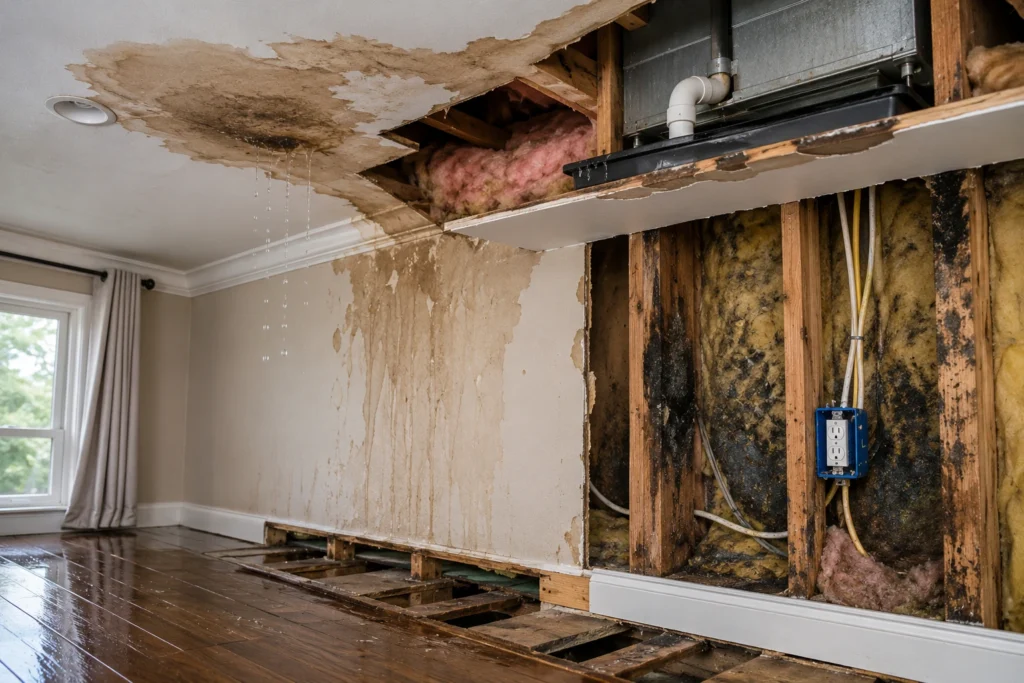
The first few hours after discovering water damage can significantly influence both repair costs and the outcome of an insurance claim. Acting quickly limits additional damage while creating a stronger record of what actually occurred. A calm, organized response usually produces the best results.
Step 1: Turn Off the HVAC System
Continuing to operate a leaking air conditioner only adds more water to the affected area. Shut the system off immediately until a qualified HVAC technician identifies the source of the problem.
Step 2: Stop Additional Water Intrusion
If it is safe to do so, contain the leak using buckets, towels, or plastic sheeting while waiting for professional assistance. Reducing further water exposure helps preserve building materials and personal belongings.
Step 3: Protect Valuable Items
Move furniture, electronics, documents, and sentimental possessions away from the affected area whenever possible. Small actions taken immediately often prevent thousands of dollars in additional losses.
Step 4: Document Everything
Before cleaning anything, take extensive photographs and videos from multiple angles.
Capture:
- Ceiling stains
- Wet flooring
- Damaged furniture
- Standing water
- HVAC equipment
- Visible leaks
- Water trails
- Affected personal belongings
These images establish valuable evidence if questions arise later during the insurance investigation.
Step 5: Contact a Water Mitigation Company
Professional drying begins with accurate moisture detection. Restoration companies use specialized equipment to locate hidden moisture behind walls, beneath flooring, and inside structural materials that cannot be evaluated through visual inspection alone. Beginning mitigation promptly also demonstrates that reasonable steps were taken to prevent additional damage after discovering the leak. In many cases, this can strengthen the overall documentation supporting your insurance claim.
Step 6: Notify Your Insurance Company
Once the immediate situation is under control, report the loss to your insurance carrier as soon as practical. Provide accurate information about when you discovered the leak, what areas appear affected, and what emergency measures have already been taken. Avoid speculating about the cause if you are unsure. Instead, stick to the facts and allow qualified HVAC technicians and restoration professionals to determine exactly what happened.
Step 7: Keep Every Receipt
Expenses related to emergency mitigation, temporary repairs, equipment rentals, and damaged personal property may become important during the claims process.
Create a dedicated folder for:
- Water mitigation invoices
- HVAC inspection reports
- Hotel expenses, if applicable
- Temporary repair receipts
- Replacement purchases
- Contractor estimates
- Insurance correspondence
Good organization often saves time later.
Homeowner Emergency Checklist
| Action | Why It Matters |
| Shut off the HVAC system | Prevents additional water discharge |
| Photograph all damage | Documents the condition before cleanup |
| Protect valuables | Reduces secondary losses |
| Contact mitigation professionals | Begins drying immediately |
| Notify your insurer | Starts the claim process promptly |
| Save every receipt | Supports reimbursement requests |
| Schedule an HVAC inspection | Identifies the source of the leak |
Documentation That Makes AC Leak Water Damage Claims Stronger
Documentation often separates straightforward claims from disputed ones. Insurance companies rely heavily on evidence when evaluating the cause, extent, and value of a loss. The more complete your records are, the easier it becomes to demonstrate what occurred.
Photographs
Take photographs before cleanup begins and continue documenting throughout the restoration process.
Capture both wide-angle views and close-up images showing:
- Ceiling stains
- Buckled flooring
- Wet insulation
- Damaged drywall
- HVAC equipment
- Moisture meter readings
- Personal belongings
Photographs taken over several days also illustrate whether damage continued to worsen.
Videos
Videos provide context that still photographs sometimes miss. Walking through the affected rooms while explaining what happened can help demonstrate the extent of the loss and show how different areas connect to one another.
HVAC Inspection Reports
An inspection from a licensed HVAC contractor often becomes one of the most valuable documents in AC Leak Water Damage Claims.
These reports may identify:
- Clogged condensate drains
- Frozen evaporator coils
- Failed pumps
- Cracked drain pans
- Refrigerant-related issues
- Mechanical failures
Independent evaluations help establish the source of the water intrusion.
Moisture Readings
Professional restoration companies use moisture meters and thermal imaging equipment to detect water hidden inside walls, ceilings, and flooring. These readings provide objective evidence that moisture exists beyond what is visible to the naked eye.
Drying Logs
Industrial drying equipment is monitored throughout the restoration process.
Daily drying logs record:
- Humidity levels
- Moisture content
- Equipment operation
- Drying progress
These records demonstrate that proper mitigation occurred.
Repair Estimates
Obtain detailed written estimates from qualified contractors.
The best estimates clearly separate:
- Demolition
- Drying
- Structural repairs
- Painting
- Flooring
- Electrical work
- Finish carpentry
Detailed scopes reduce confusion during claim negotiations.
Receipts
Save every receipt related to emergency mitigation and repairs. Even relatively small purchases can become reimbursable depending on your policy.
Communication Records
Maintain copies of:
- Emails
- Letters
- Claim numbers
- Inspection dates
- Phone call summaries
- Adjuster contact information
A simple claim journal helps organize important conversations.
Documentation Checklist
| Document | Purpose |
| Photos | Shows visible damage |
| Videos | Demonstrates overall conditions |
| HVAC inspection | Identifies the leak source |
| Moisture reports | Confirms hidden damage |
| Drying logs | Documents mitigation efforts |
| Repair estimates | Supports repair costs |
| Receipts | Verifies expenses |
| Communication log | Tracks claim progress |
Hidden Damage Insurance Adjusters May Miss
Visible stains rarely tell the entire story. Water frequently spreads behind drywall, beneath flooring, above ceilings, and inside insulation long before it appears on finished surfaces. Without specialized inspection methods, portions of the damage may remain undiscovered until repairs begin.
Hidden moisture commonly affects:
- Wall cavities
- Ceiling framing
- Roof decking near attic units
- Subfloors
- Insulation
- Baseboards
- Interior trim
- HVAC ductwork
One overlooked area can later develop mold, wood rot, or structural deterioration that substantially increases repair costs. Professional restoration companies often use thermal imaging cameras and moisture mapping to identify these concealed problem areas. Their findings provide valuable support during AC Leak Water Damage Claims, especially when hidden damage extends beyond what is immediately visible.
The Insurance Claim Process for AC Leak Water Damage
Understanding the claims process removes much of the uncertainty homeowners experience after discovering water damage.
Report the Loss
The process begins by notifying the insurance company.
Provide accurate details regarding:
- Date of discovery
- Suspected cause
- Areas affected
- Emergency mitigation already completed
Insurance Inspection
The insurance company assigns an adjuster to inspect the property.
During the inspection, the adjuster evaluates:
- Cause of loss
- Extent of damage
- Policy coverage
- Repair requirements
Having your own documentation available during this visit helps ensure nothing important is overlooked.
Estimate Preparation
After the inspection, repair estimates are prepared based on observed damage. Depending on the complexity of the claim, additional inspections by engineers, HVAC specialists, electricians, or restoration professionals may also be requested.
Policy Review
The insurance company compares the reported damage with the policy language.
Coverage decisions often depend upon:
- Cause of the leak
- Timing
- Maintenance history
- Applicable exclusions
- Policy endorsements
Settlement Offer
Once the evaluation is complete, the insurer typically issues a settlement decision. Review the estimate carefully. If important repairs appear missing, additional documentation may support a request for reconsideration.
Repairs Begin
After claim approval, contractors begin restoring the home.
Repairs often include:
- Drywall replacement
- Insulation installation
- Flooring repairs
- Painting
- Cabinet restoration
- Electrical work
- HVAC repairs
Keeping organized records throughout construction remains beneficial until the project is fully completed.
Common Reasons AC Leak Water Damage Claims Are Denied
Insurance claim denials can be frustrating, especially when homeowners believe the damage should be covered. Several recurring issues contribute to denied or partially paid claims.
Delayed Reporting
Waiting weeks before reporting water damage makes it more difficult to determine exactly when the leak occurred. Insurers may argue that additional deterioration happened after the homeowner became aware of the problem.
Insufficient Documentation
Without photographs, inspection reports, or contractor evaluations, proving the extent of the damage becomes significantly harder. Documentation remains one of the strongest tools available during claim reviews.
Lack of Maintenance Records
Insurance companies sometimes request maintenance documentation when evaluating HVAC-related claims. Annual servicing, filter replacement records, and inspection reports demonstrate responsible ownership.
Wear and Tear
Homeowners insurance generally does not cover ordinary aging or equipment deterioration. If the HVAC system simply reached the end of its service life, repairing the unit itself may not qualify for reimbursement, even if resulting water damage receives separate consideration.
Mold Exclusions
Many policies contain limitations regarding mold. If mold develops because a leak remained unaddressed for an extended period, portions of the resulting remediation costs may not be covered.
Failure to Mitigate
Homeowners are generally expected to take reasonable steps to prevent additional damage after discovering a leak. Ignoring standing water or delaying emergency drying may complicate portions of the claim.
How to Prevent Future AC Water Damage
Preventive maintenance costs far less than major repairs. Simple inspections performed throughout the year can reduce the likelihood of unexpected water intrusion.
Consider incorporating these habits into your home maintenance routine:
- Replace HVAC filters every one to three months.
- Flush condensate drain lines annually.
- Schedule professional HVAC inspections before peak cooling season.
- Install an overflow shutoff switch.
- Add smart water leak sensors near indoor air handlers.
- Inspect drain pans for rust or cracks.
- Keep attic HVAC units accessible for routine inspections.
- Watch for unusual humidity or ceiling discoloration.
Seasonal HVAC Maintenance Checklist
| Maintenance Task | Recommended Frequency |
| Replace air filter | Every 1–3 months |
| Flush drain line | Annually |
| HVAC inspection | Annually |
| Inspect drain pan | Annually |
| Test condensate pump | Annually |
| Check overflow switch | Annually |
| Inspect attic unit | Before summer |
Preventive maintenance doesn’t guarantee leaks will never occur, but it significantly lowers the risk of unexpected failures.
When Should You Consider Hiring a Public Adjuster?
Not every insurance claim requires outside assistance. However, larger losses often involve complicated estimates, hidden structural damage, multiple contractors, and differing opinions regarding coverage.
A public adjuster may be worth considering when:
- Multiple rooms are affected.
- Hidden moisture extends behind walls.
- Settlement offers appear incomplete.
- The insurer disputes the scope of repairs.
- The claim experiences repeated delays.
- Portions of the damage receive partial denial.
- Significant structural repairs are involved.
Public adjusters work on behalf of policyholders rather than insurance companies. They review policy language, inspect damage, prepare detailed estimates, organize supporting documentation, and negotiate with the insurer throughout the claims process. For homeowners dealing with extensive losses in Cedar Hill, professional representation can provide additional confidence when navigating a complicated insurance claim.
Why Fast Action Matters
Water damage rarely remains confined to one location. Moisture continues spreading through porous building materials until the source is stopped and drying begins. Every additional day increases the likelihood of more extensive repairs, longer restoration timelines, and higher overall costs.
Quick action also improves documentation. Fresh damage is easier to identify, moisture readings are more accurate, and HVAC inspections can better determine the original cause of the leak before conditions change. Homeowners in Cedar Hill often rely heavily on air conditioning during long periods of warm weather. Increased system usage naturally increases wear on condensate components, making routine maintenance and prompt leak detection especially important.
Final Thoughts
An air conditioner leaking water may seem like a minor inconvenience at first, yet the resulting damage can become surprisingly extensive. Ceilings, flooring, insulation, electrical systems, cabinetry, and personal belongings may all be affected before visible signs appear. That is why understanding AC Leak Water Damage Claims before disaster strikes is so valuable. Successful claims begin with quick action. Shut down the system, stop additional water intrusion, document every affected area, contact qualified mitigation professionals, and preserve all records related to the loss. Small decisions made during the first few hours often influence the entire claim.
Equally important is understanding your insurance policy. Coverage frequently depends on whether the damage resulted from a sudden and accidental event or from gradual deterioration and deferred maintenance. Knowing these distinctions helps homeowners set realistic expectations while preparing stronger documentation. Property damage can feel overwhelming, but a methodical approach makes the recovery process far more manageable. Whether the repairs involve one room or an entire home, organized records, professional inspections, and timely communication provide a solid foundation for resolving the claim efficiently.
Finally, if you believe your insurer has underestimated the scope of repairs or overlooked important evidence, seeking experienced guidance may help protect your interests. Homeowners throughout Cedar Hill who stay informed, act quickly, and carefully document every stage of the loss place themselves in a much stronger position to achieve a fair outcome. As restoration professionals sometimes explain, understanding concepts such as hygroscopy the ability of certain materials to absorb moisture helps illustrate why hidden water damage can persist even after surfaces appear dry.
FAQs
The most common causes include a clogged condensate drain line, frozen evaporator coil, dirty air filter, damaged drain pan, or a failed condensate pump.
It may, depending on your policy. Sudden and accidental water damage is often covered, while damage caused by long-term leaks or poor maintenance is frequently excluded.
If the leak has caused significant damage to your home or belongings, it may be worth filing a claim. Consider obtaining repair estimates before deciding.
You should report the damage as soon as possible after discovering it. Prompt reporting helps establish a clear timeline and may strengthen your claim.
Photograph and video the affected areas, protect your belongings, and document the damage before beginning cleanup or repairs.
Coverage varies by policy. Mold resulting from a sudden covered loss may be covered in some cases, while mold caused by prolonged neglect is often excluded.
Helpful documentation includes photos, videos, HVAC inspection reports, moisture readings, contractor estimates, receipts, and communication records with your insurer.
Yes. Hidden moisture behind walls, ceilings, and flooring can increase repair costs, so professional inspections are important to identify the full extent of the damage.
Most homeowners insurance policies do not cover repairing or replacing an air conditioner due to normal wear and tear. However, they may cover resulting water damage if the loss is otherwise covered.
You may benefit from hiring a public adjuster if your claim is large, partially denied, delayed, or if you believe the insurance settlement does not fully cover your losses.