
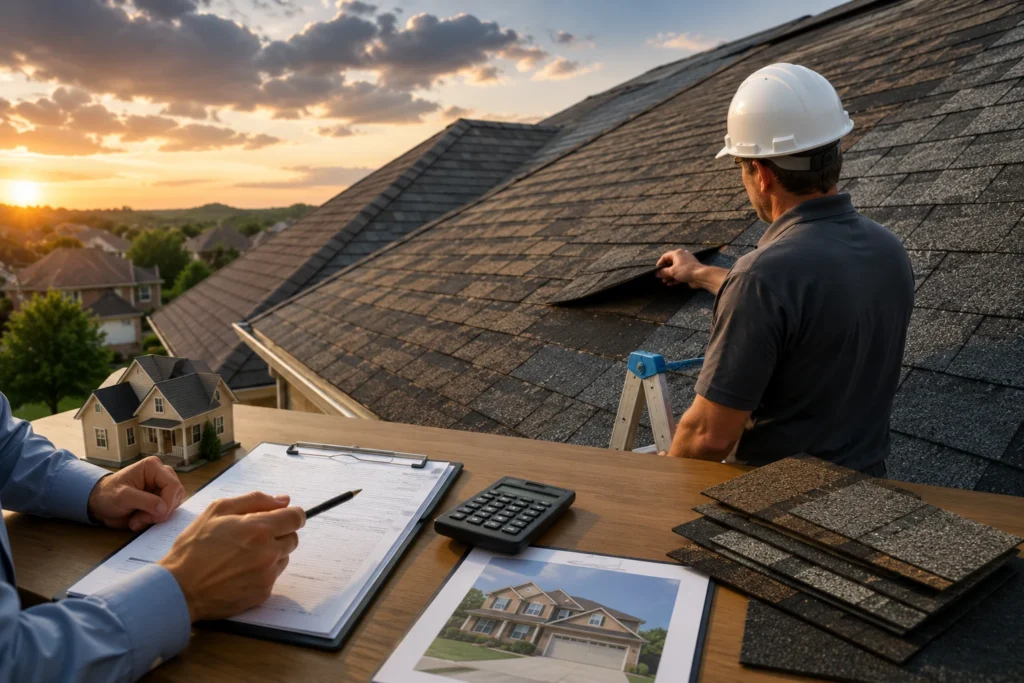
Roof damage is stressful enough without discovering that your insurance company only wants to replace part of your roof. That is why understanding matching laws for roof replacement in Cedar Hill, TX can make a significant difference before you file a claim or accept a settlement offer. While many homeowners assume their insurer must restore the roof to its original appearance, the reality is more nuanced. Texas insurance claims often depend on policy language, material availability, and the facts surrounding the loss rather than appearance alone.
A roof is much more than a protective covering. It contributes to your home’s curb appeal, resale value, weather resistance, and structural integrity. When only one section of the roof is repaired with new shingles that fail to match the existing materials, the result can leave homeowners frustrated. Even if the repair addresses the physical damage, the roof may look patched together, reducing the home’s overall appearance and potentially affecting future buyers.
Insurance disputes involving roof matching have become increasingly common across Texas. Manufacturers discontinue products every year, colors fade under years of sun exposure, and storms rarely damage every portion of a roof equally. Consequently, homeowners frequently wonder whether they should receive payment for a complete roof replacement instead of repairs limited to one slope. Understanding how insurers evaluate these situations allows you to prepare stronger documentation before negotiations begin.
If your roof suffered storm damage, learning How to Identify Hail Damage by Roof Type is one of the smartest first steps you can take. Different roofing materials display hail impacts differently, and recognizing those patterns early helps support a stronger insurance claim. Combined with a clear understanding of roof matching issues, proper identification improves the likelihood of documenting the full extent of your loss before the insurer completes its inspection. Throughout this guide, we’ll explain how roof matching works in Texas, why insurance companies sometimes approve only partial replacements, what evidence strengthens your claim, and how you can position yourself for a fair settlement. Rather than relying on assumptions, you’ll learn practical strategies that help protect both your home and your financial investment.
What Are Matching Laws for Roof Replacement?
The phrase “matching laws” often causes confusion because many homeowners assume every state requires insurance companies to restore a damaged roof to a perfectly uniform appearance. In reality, matching requirements vary considerably from one state to another, and Texas approaches these claims differently than many people expect.
Simply put, roof matching refers to replacing damaged roofing materials with products that reasonably match the existing roof in color, texture, size, and overall appearance. When identical materials are unavailable, disagreements frequently arise regarding whether partial repairs are sufficient or whether replacing the entire roof is necessary. While homeowners naturally focus on appearance, insurance companies typically evaluate additional considerations such as repair feasibility, material availability, policy language, and the scope of covered damage. Therefore, understanding the broader context helps set realistic expectations before filing a claim.
The Purpose of Matching Requirements
The goal of roof matching extends beyond aesthetics.
A home’s roof represents one of its largest visible exterior features. If replacement shingles differ dramatically from the original roofing materials, the finished repair may create noticeable patches that stand out from the rest of the home.
Matching principles generally seek to preserve several important characteristics:
- Consistent appearance
- Overall property value
- Functional performance
- Long-term durability
- Visual uniformity after repairs
For homeowners, maintaining these qualities often feels just as important as repairing the physical storm damage itself.
Why Roof Matching Becomes Difficult
Even roofs installed only ten years ago may present significant matching challenges. Several factors contribute to this problem.
| Matching Challenge | Why It Matters |
| Manufacturer discontinued the product | Exact replacement shingles may no longer exist. |
| Sun fading | Existing shingles change color over time. |
| Weather exposure | Wind, rain, and UV rays alter appearance. |
| Production changes | Modern manufacturing methods create slight variations. |
| Aging roof materials | Older roofs develop unique textures that cannot be replicated. |
As a result, installing brand-new shingles beside weathered roofing often creates obvious differences that homeowners immediately notice.
Does Texas Have a Roof Matching Law?
One of the biggest misconceptions surrounding insurance claims involves the belief that Texas requires insurance companies to replace an entire roof whenever repaired areas fail to match. That is not necessarily the case. Unlike several other states, Texas does not have a statewide statute specifically requiring insurers to replace an undamaged portion of a roof solely because new shingles fail to match older ones. Instead, each claim depends largely on the language contained within the homeowner’s insurance policy and the specific facts surrounding the loss. This distinction is extremely important. Rather than asking whether Texas law guarantees a matching roof, homeowners should instead ask whether their insurance policy provides coverage that supports replacing additional materials when matching is impossible.
Insurance Policies Drive Most Decisions
Every homeowner’s insurance policy contains detailed language explaining what the insurer agrees to cover.
Common provisions include:
- Replacement Cost Value (RCV)
- Actual Cash Value (ACV)
- Like kind and quality
- Comparable construction materials
- Repair versus replacement standards
Each of these provisions may influence whether a partial repair satisfies the policy requirements. For example, a Replacement Cost Value policy generally provides broader coverage than an Actual Cash Value policy because depreciation does not reduce the amount ultimately available for covered repairs. However, broader coverage still does not automatically guarantee payment for a completely new roof. Reading the policy carefully remains one of the most valuable steps homeowners can take before beginning negotiations.
Why Policy Language Matters More Than Assumptions
Many disputes arise because homeowners understandably believe “replacement” means restoring the roof to its exact pre-loss appearance. Insurance companies may interpret the same policy differently.
Instead, adjusters often examine whether the damaged section can be repaired using materials considered reasonably comparable. If similar shingles remain commercially available—even if they are not identical the insurer may conclude that replacing only the damaged area satisfies the policy. That difference in interpretation frequently becomes the heart of roof matching disputes.
When Can an Entire Roof Be Replaced Instead of Just One Slope?
Although insurers commonly approve partial repairs, there are situations where replacing the entire roof becomes the more practical solution. These situations usually depend on objective evidence rather than personal preference.
Matching Materials No Longer Exist
One of the strongest arguments supporting complete roof replacement involves discontinued roofing products. Manufacturers routinely stop producing older shingles as product lines evolve. When contractors cannot obtain matching materials despite reasonable efforts, repairing only one section may produce substantial visual differences across the roof.
Helpful evidence may include:
- Manufacturer discontinuation letters
- Supplier inventory reports
- Roofing distributor correspondence
- Product availability documentation
- Contractor verification
The stronger your documentation, the easier it becomes to demonstrate why partial repairs may not fully restore the property.
Functional Problems Can Extend Beyond Appearance
Homeowners often assume matching disputes involve only cosmetic concerns. That is not always true.
Different roofing products may have varying:
- Thickness
- Wind ratings
- Installation methods
- Fastening requirements
- Water-shedding characteristics
Combining incompatible materials can occasionally affect roof performance over time. Consequently, contractors sometimes recommend replacing larger roof sections rather than creating transitions between different roofing systems.
Professional evaluations become especially valuable in these situations because they explain both the visual and functional implications of partial repairs.
Extensive Storm Damage Changes the Conversation
The more widespread the damage becomes, the stronger the case for broader replacement.
Consider the following comparison.
| Damage Scenario | Likely Insurance Evaluation |
| Minor damage to several shingles | Localized repair may be appropriate. |
| Heavy hail across multiple slopes | Partial replacement may be insufficient. |
| Wind damage affecting several elevations | Larger replacement areas become more likely. |
| Widespread brittle shingles after storm impacts | Full replacement may better restore functionality. |
Every claim remains unique. However, widespread damage generally shifts the discussion beyond simple matching concerns and toward restoring the roof’s overall performance.
Common Situations That Create Roof Matching Problems
Not every insurance claim creates a matching dispute. Certain types of losses make these disagreements much more common.
Hail Damage
Hail rarely strikes every portion of a roof with identical force. Some slopes receive severe impacts while others sustain only minor damage. Consequently, insurers may recommend replacing only the most heavily affected areas. Unfortunately, those new shingles may contrast sharply with older roofing materials that have weathered for years.
Wind Damage
Strong winds often lift shingles unevenly.
One roof slope may lose dozens of shingles while the opposite side appears relatively untouched. Even when replacement products remain available, slight color variations can become highly noticeable after installation.
Wind events also expose underlying issues that contractors frequently discover once repairs begin, sometimes expanding the scope of work beyond the original estimate.
Fire Damage
Localized fires create another challenging situation.
Although flames may damage only one roof section, smoke, heat exposure, and water used during firefighting efforts can affect surrounding materials. Evaluating these secondary impacts often requires a more comprehensive inspection than homeowners initially expect.
Fallen Trees
Tree impacts usually damage concentrated portions of a roof. However, repairs become more complicated if replacement materials are obsolete or if structural framing beneath the shingles also requires reconstruction. In these cases, matching concerns may overlap with broader structural repair considerations, making detailed inspections especially important.
How Insurance Companies Evaluate Matching Claims
Once a claim is filed, the insurance company begins gathering information to determine the appropriate scope of repairs. Contrary to what many homeowners expect, the adjuster is not simply comparing colors or deciding whether the roof “looks right.” Instead, the evaluation typically focuses on whether the damaged property can be repaired with materials of similar function and quality while complying with the terms of the insurance policy. Every claim involves documentation, inspections, and professional opinions. The stronger your evidence, the easier it becomes to demonstrate why a complete roof replacement may be more appropriate than a limited repair.
Material Availability
One of the first questions an adjuster may ask is whether matching roofing materials are still manufactured.
If identical shingles remain available through manufacturers or distributors, the insurer may argue that replacing only the damaged section restores the roof adequately. On the other hand, if the product has been discontinued for several years, obtaining an exact match may be impossible. This is why documentation from roofing suppliers carries significant weight. A written statement confirming that a specific product is no longer available provides objective evidence that supports your position during claim negotiations.
Roof Age
Age alone does not determine whether a roof qualifies for full replacement. However, it does influence the evaluation. Older roofs often exhibit fading, granule loss, and natural weathering that make new materials stand out dramatically. Even if replacement shingles share the same product name, manufacturing changes over time can create visible differences that become apparent immediately after installation. Insurance companies may also evaluate the remaining useful life of the roof when determining the appropriate repair strategy.
Weathering and Color Fading
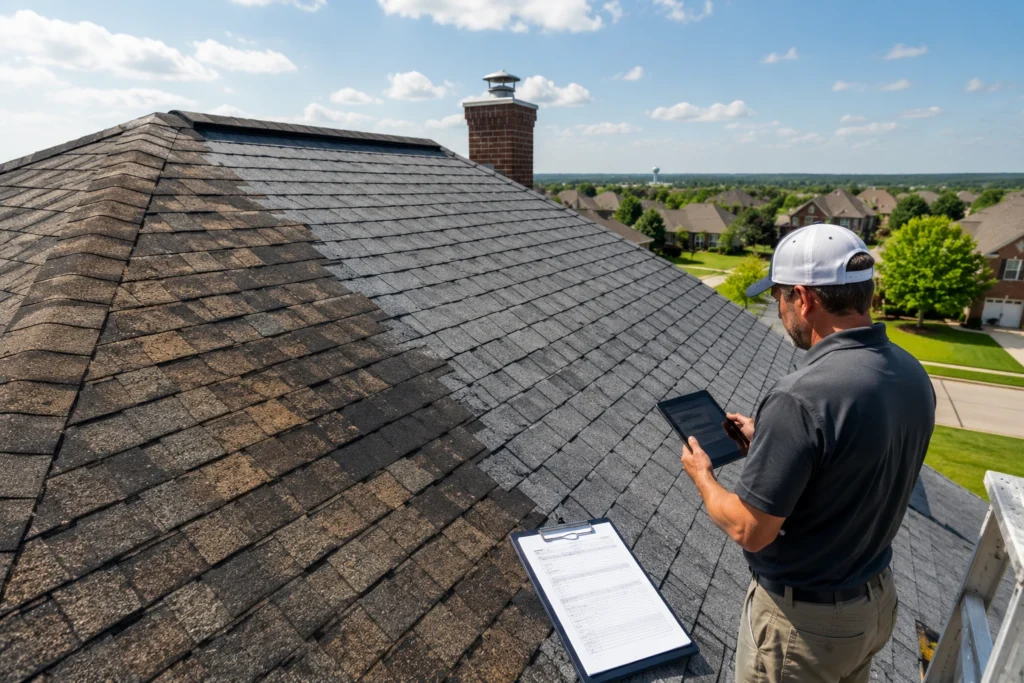
Sun exposure changes roofing materials more than many homeowners realize. Years of ultraviolet light, rain, heat, and seasonal weather gradually alter both the color and texture of shingles. As a result, brand-new replacement materials may look significantly different even if they originated from the same manufacturer. A professional roofing contractor can often explain whether these differences are minor or substantial enough to affect the roof’s overall appearance and marketability.
Manufacturer Documentation
Manufacturers frequently update product lines, discontinue colors, or modify production methods. Documentation confirming these changes can strengthen a matching claim considerably.
Examples include:
- Letters confirming discontinued shingles
- Color availability notices
- Technical product bulletins
- Manufacturing specifications
- Archived product catalogs
These records help demonstrate that the issue extends beyond homeowner preference.
Roofing Contractor Reports
Experienced roofing contractors do far more than prepare repair estimates.
They evaluate:
- Damage patterns
- Material compatibility
- Repair feasibility
- Installation concerns
- Product availability
- Long-term performance
A detailed written report explaining why repairs may not produce a reasonably uniform roof often becomes one of the most persuasive pieces of evidence during negotiations.
Engineering Reports
Some claims involve structural questions that require additional expertise. Independent engineers may inspect the roof to determine whether hidden damage exists beneath the shingles or whether storm impacts affected underlying components. Although engineering reports are not necessary in every claim, they sometimes become valuable when insurers question the extent of storm-related damage.
Evidence That Strengthens a Matching Claim
Insurance claims succeed because of evidence not assumptions. The more organized your documentation, the stronger your position becomes when discussing repairs with the insurance company. Waiting until disagreements arise often makes gathering information more difficult, so begin documenting the loss as early as possible.
Below are some of the most valuable forms of evidence homeowners can collect.
| Documentation | Why It Matters |
| Roof inspection report | Identifies damage and repair recommendations. |
| High-resolution photographs | Provides visual proof before repairs begin. |
| Drone images | Shows damage across multiple roof slopes. |
| Manufacturer letters | Confirms discontinued roofing products. |
| Supplier inventory reports | Demonstrates matching materials cannot be purchased. |
| Contractor estimates | Explains the scope and cost of repairs. |
| Weather reports | Confirms storm activity in the area. |
| Insurance policy | Defines available coverage and limitations. |
Organizing these documents into one file allows you to respond quickly whenever the insurer requests additional information.
Take Photographs Immediately
Photographs remain one of the simplest yet most valuable pieces of evidence. Capture images from multiple angles.
Include:
- Overall roof views
- Individual damaged shingles
- Hail impacts
- Missing shingles
- Flashing damage
- Gutters
- Downspouts
- Roof accessories
Whenever possible, use time-stamped photographs and avoid making temporary repairs until the damage has been documented.
Preserve Damaged Materials
If shingles blow off during a storm, resist the urge to throw them away. Instead, store damaged materials in a safe location until your claim has been resolved. These samples may help roofing contractors identify discontinued products or demonstrate manufacturing characteristics that support your matching claim.
Request Written Statements
Verbal conversations are helpful. Written documentation is better. Ask roofing contractors, suppliers, or manufacturers to provide written statements whenever they confirm product discontinuation, repair limitations, or material incompatibility. Clear documentation often eliminates misunderstandings later in the claim process.
Why Insurance Companies May Deny Full Roof Replacement
Receiving a partial settlement can be frustrating. However, understanding the insurer’s reasoning allows homeowners to address concerns more effectively instead of assuming the decision is final. Below are several common reasons insurers decline requests for complete roof replacement.
Matching Materials Still Exist
If identical or reasonably comparable shingles remain commercially available, the insurer may conclude that localized repairs satisfy the policy. This often becomes a factual dispute rather than a legal one. Contractors, suppliers, and manufacturers may disagree about whether available products truly provide a suitable match.
Damage Is Limited
Insurance policies generally cover direct physical damage caused by a covered event. If only a small roof section sustained damage, the insurer may argue that replacing unaffected portions exceeds the scope of the covered loss. Documentation showing additional storm impacts can help clarify whether the damage extends beyond the initially identified area.
Cosmetic Damage Exclusions
Some homeowner policies contain provisions limiting or excluding coverage for purely cosmetic damage. In these situations, the insurer may acknowledge slight color differences while maintaining that the roof continues functioning properly. Reading the policy carefully becomes essential because cosmetic exclusions vary considerably between insurance companies.
Policy Limitations
Coverage depends on the contract. Even homeowners with similar roofs may receive different settlement outcomes because their insurance policies contain different endorsements, deductibles, exclusions, or valuation methods. Never assume your neighbor’s claim outcome will match your own.
Wear and Tear Findings
Insurance covers sudden, accidental damage not normal aging. If the adjuster concludes that deterioration, maintenance issues, or long-term wear caused much of the observed damage, coverage may be reduced or denied. Maintaining inspection records and repair history helps distinguish storm damage from ordinary aging.
The Role of Roofing Contractors
Roofing contractors serve a much larger role than simply replacing shingles. An experienced contractor understands how storm damage affects different roofing systems and can explain why certain repairs may not restore the roof adequately. Choosing the right contractor early in the claims process often improves both documentation quality and repair planning.
Identifying Roofing Materials
One of the contractor’s first responsibilities is determining exactly what roofing product was originally installed.
This includes identifying:
- Manufacturer
- Product line
- Color
- Style
- Installation method
- Approximate age
Accurate identification helps suppliers determine whether matching materials remain available.
Researching Product Availability
Contractors regularly communicate with distributors and manufacturers. If matching shingles have been discontinued, they can often obtain written confirmation supporting the homeowner’s claim. These documents provide independent evidence that strengthens negotiations with the insurance company.
Evaluating Repair Feasibility
Not every roof should be repaired. Some roofs have become brittle with age, while others contain installation methods that complicate localized repairs. Contractors evaluate whether replacing isolated sections may create additional problems or compromise long-term performance. Their recommendations should always be supported by objective findings rather than assumptions.
Preparing Detailed Estimates
Professional estimates do far more than list material costs.
A comprehensive estimate typically includes:
- Labor requirements
- Material quantities
- Code-related upgrades
- Flashing replacement
- Underlayment needs
- Ventilation components
- Waste removal
- Safety requirements
Detailed estimates help ensure that the insurance company evaluates the complete scope of necessary repairs rather than only the most obvious visible damage.
Communicating with Homeowners
Perhaps most importantly, experienced contractors help homeowners understand the repair process. They explain inspection findings, answer questions, and identify potential issues before construction begins. Clear communication reduces surprises and allows homeowners to make informed decisions throughout the insurance claim process.
How a Public Adjuster Can Help
Insurance companies employ adjusters to evaluate claims on behalf of the insurer. Homeowners, however, are responsible for protecting their own interests. That difference in perspective can become especially important when a claim involves roof matching, discontinued materials, or disputes over whether a partial repair is appropriate.
A public adjuster works for the policyholder not the insurance company. Their role is to review the policy, evaluate the loss, prepare documentation, and negotiate for a fair settlement based on the available evidence. While every claim is unique, professional representation can help homeowners better understand their rights and obligations throughout the claims process.
Reviewing Your Insurance Policy
Insurance policies contain dozens of provisions that influence coverage.
A public adjuster carefully reviews important sections, including:
- Replacement Cost Value provisions
- Actual Cash Value provisions
- Exclusions
- Endorsements
- Cosmetic damage limitations
- Deductible requirements
- Loss settlement language
Understanding these provisions before negotiations begin helps eliminate surprises later in the claim.
Documenting the Entire Loss
One of the biggest mistakes homeowners make is focusing only on the most visible roof damage.
A comprehensive claim may include damage to:
- Roofing materials
- Flashing
- Ridge vents
- Gutters
- Downspouts
- Window screens
- Fencing
- Outdoor structures
- Interior water damage
A public adjuster works to document every covered component rather than limiting the claim to the obvious areas.
Challenging Low Settlement Offers
Not every initial settlement reflects the full scope of the damage. If important repairs have been overlooked or matching issues have not been fully considered, additional documentation may justify a revised estimate. Supporting evidence from contractors, manufacturers, and suppliers often strengthens these discussions. Rather than relying on opinions alone, successful negotiations are built on facts.
Negotiating with the Insurance Company
Negotiation involves more than requesting additional money. It requires presenting organized documentation, interpreting policy language, responding to insurer questions, and supporting every requested adjustment with credible evidence. Well-prepared documentation frequently carries more influence than emotional arguments.
Supporting Appraisal or Other Dispute Resolution Options
Some claims remain unresolved even after multiple discussions. Depending on the insurance policy, additional dispute resolution options may be available, including appraisal. While appraisal does not resolve every disagreement, it may provide another avenue for addressing disputes over the value or scope of a covered loss. Understanding these options before conflicts escalate can help homeowners make informed decisions.
Special Considerations for Homeowners in Cedar Hill
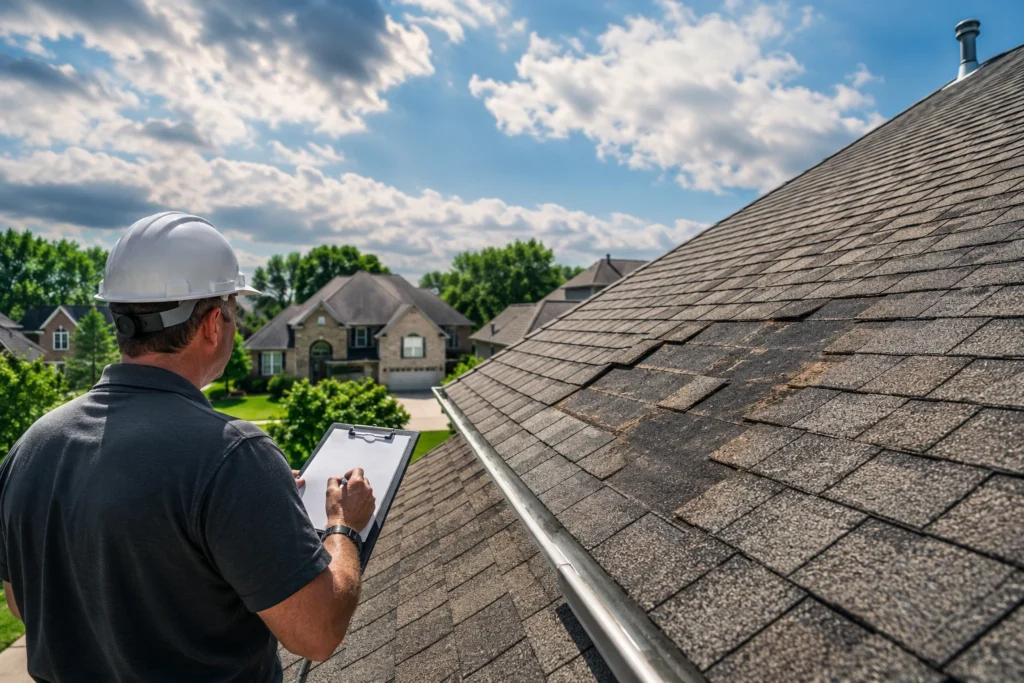
Every community experiences different weather patterns, housing styles, and roofing materials. Those local factors often influence how insurance claims develop after severe storms. For homeowners in Cedar Hill, hail and strong wind events are among the most common causes of roof damage. Even when damage appears isolated at first, a thorough inspection may reveal impacts across multiple roof slopes, damaged flashing, or compromised roof accessories.
Many homes in the area also feature asphalt shingle roofing installed years ago. As these roofs age, matching replacement materials become more difficult to locate. Manufacturers frequently discontinue colors and product lines, making it challenging to repair only one section without creating noticeable differences. Local weather also accelerates fading. Years of Texas sunshine, heat, and seasonal storms gradually change the appearance of roofing materials. Consequently, even shingles from the same manufacturer may look noticeably different after installation if the existing roof has weathered for a decade or longer.
Another consideration involves acting quickly after a storm. Waiting several months before scheduling an inspection may complicate the claim process. Additional weather exposure can make it harder to distinguish recent storm damage from normal aging, giving insurers more opportunity to question the cause of the damage. Homeowners in Cedar Hill benefit from documenting storm damage as soon as it is safe to do so. Prompt inspections, detailed photographs, and organized records often create a stronger foundation for any insurance claim involving roof matching.
Common Mistakes Homeowners Should Avoid
Even a valid insurance claim can become more difficult if avoidable mistakes occur during the process. Fortunately, most of these issues are preventable with careful planning.
Waiting Too Long to Report Damage
Time matters. Reporting storm damage promptly allows inspections to occur before additional deterioration or weather exposure complicates the investigation. Delays may also raise questions about when the damage actually occurred.
Assuming Every Mismatch Qualifies for Full Replacement
Not every visible color difference results in coverage for a new roof. Coverage depends on the insurance policy, the extent of the damage, material availability, and supporting documentation. Understanding this distinction helps homeowners set realistic expectations from the beginning.
Throwing Away Important Evidence
Discarding damaged shingles, repair invoices, or inspection reports can weaken a claim unnecessarily.
Instead, preserve:
- Damaged roofing materials
- Inspection reports
- Contractor estimates
- Weather records
- Receipts
- Photographs
- Correspondence with the insurance company
Good organization often saves valuable time later.
Accepting the First Settlement Without Reviewing It
An initial settlement offer is not always the final word.
Before agreeing to repairs, carefully review:
- Scope of repairs
- Material allowances
- Code upgrades
- Roofing components
- Matching concerns
- Depreciation calculations
If questions remain, seek clarification before signing any documents.
Hiring the Lowest Bid Without Research
Price should never be the only factor when selecting a roofing contractor.
Instead, evaluate:
- Experience
- Licensing requirements
- Insurance
- References
- Written estimates
- Warranty information
An experienced contractor can often identify issues that less experienced companies overlook.
Practical Steps to Strengthen Your Roof Replacement Claim
Preparing a strong insurance claim begins long before negotiations start. Homeowners who stay organized and gather reliable evidence often place themselves in a much stronger position than those who rely solely on verbal conversations.
Here is a practical action plan to follow after discovering roof damage:
- Inspect the property safely from the ground and document visible damage.
- Take clear, time-stamped photographs of every affected area.
- Schedule a professional roof inspection as soon as possible.
- Notify your insurance company promptly.
- Save damaged roofing materials whenever practical.
- Request written documentation regarding discontinued shingles or unavailable materials.
- Keep copies of every estimate, receipt, report, and email.
- Review your insurance policy carefully before agreeing to repairs.
- Ask questions whenever the settlement offer seems unclear.
- Consider obtaining professional assistance if significant disagreements arise regarding the scope of repairs.
Following these steps creates a well-documented claim supported by objective evidence rather than assumptions.
Final Thoughts
Roof matching disputes are rarely as straightforward as homeowners expect. While many people assume a visibly mismatched roof automatically qualifies for complete replacement, insurance claims in Texas depend on much more than appearance. Policy language, the availability of replacement materials, the extent of storm damage, and the quality of supporting documentation all play significant roles in determining the outcome.
Understanding matching laws for roof replacement in Cedar Hill, TX empowers homeowners to approach the claims process with realistic expectations and stronger preparation. Instead of focusing only on the visible differences between old and new shingles, gather detailed evidence, work with qualified professionals, and review your policy carefully before making important decisions.
If your roof has been damaged and questions remain about whether a partial repair truly restores your property, taking the time to investigate the facts can make a meaningful difference. For many homeowners in Cedar Hill, the strongest claims are built on thorough inspections, organized documentation, and informed negotiations—not assumptions. By approaching the process strategically, you can better protect both your home and your financial investment while pursuing the settlement you believe your policy provides.
FAQs
No. Texas does not have a statewide roof matching law requiring full replacement solely because of appearance; coverage depends on your insurance policy and the specific facts of the claim.
The term refers to how insurance claims are handled when replacement roofing materials cannot reasonably match the existing roof. Policy language and material availability typically determine whether additional replacement is covered.
Possibly. If identical shingles are no longer available and the mismatch is significant, documentation from manufacturers or suppliers may strengthen your claim.
Not always. Some policies limit or exclude coverage for cosmetic damage, so it’s important to review your policy carefully.
Professional inspection reports, photos, manufacturer letters, supplier documentation, contractor estimates, and weather reports can all strengthen your claim.
Yes. A qualified roofing contractor can identify storm damage, determine material availability, and provide documentation that supports your claim.
Yes. A public adjuster represents your interests by reviewing your policy, documenting the damage, and negotiating with the insurance company for a fair settlement.
Review the settlement carefully and compare it with your contractor’s findings. If important damage or matching issues were overlooked, you may have grounds to request a reconsideration.
You should report the damage as soon as possible. Prompt reporting helps preserve evidence and reduces questions about when the damage occurred.
It can. A visibly mismatched roof may reduce curb appeal and could influence buyer perception, depending on the extent of the difference.