
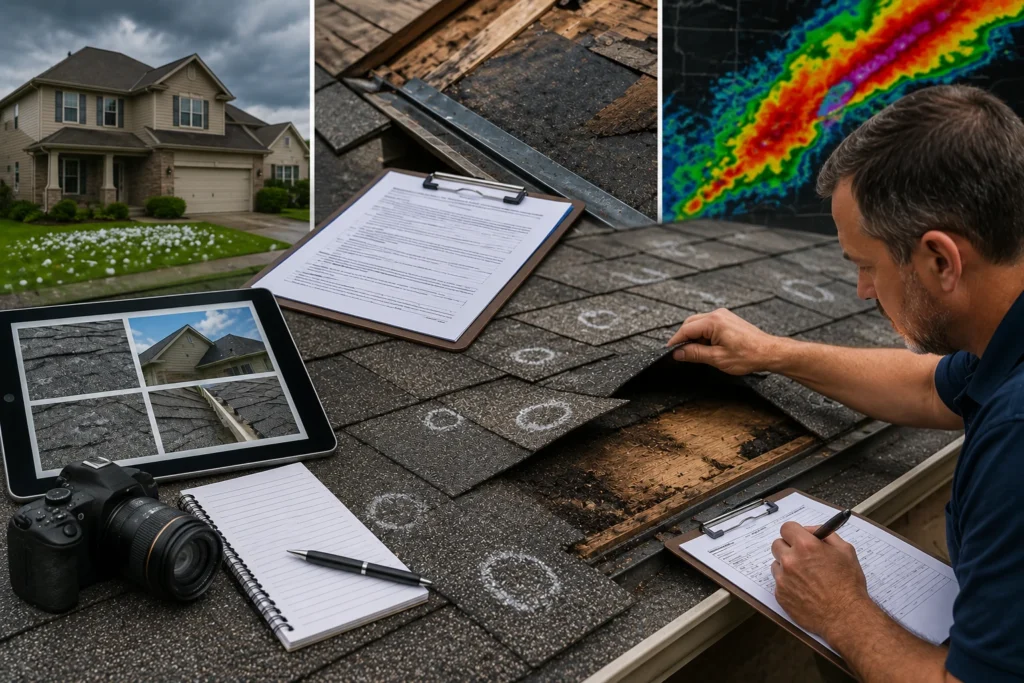
Hailstorms can leave behind obvious destruction, but not every damaged roof tells its story right away. In many cases, homeowners discover problems months after a storm has passed, leading to one critical question: does insurance cover old hail damage? The answer is rarely as simple as yes or no. Coverage depends on your policy, the condition of your roof, the available evidence, and whether the damage can be connected to a covered weather event. If you own a home in Cedar Hill, understanding how insurance companies evaluate older hail claims could make a significant difference in the outcome of your claim.
Most people inspect their roof only after a severe storm or when a leak appears inside the house. Unfortunately, hail damage often develops quietly. Tiny fractures in shingles, loosened protective granules, or damaged flashing may not cause immediate problems. Over time, however, those seemingly minor issues can evolve into expensive repairs that require far more than replacing a few shingles. That delay creates confusion. Homeowners naturally wonder whether insurance will still help when the damage wasn’t discovered immediately. While many policies do provide coverage under the right circumstances, insurers also investigate whether the damage resulted from a single storm, long-term deterioration, or inadequate maintenance. Knowing the difference helps you avoid costly mistakes before filing a claim.
The same principles apply across different types of property claims. Whether someone needs assistance from a Fire Insurance Adjuster after a devastating blaze or help documenting storm damage after hail, one fact remains constant: thorough documentation and professional evaluation often strengthen an insurance claim considerably. Insurance policies are designed to protect against sudden and accidental losses. Hail usually qualifies because it occurs unexpectedly. The challenge isn’t whether hail is covered. Instead, the real issue is proving that your roof suffered damage during a covered event rather than gradually wearing out over time.
That distinction becomes increasingly important as roofs age. A roof that has survived multiple storms, years of sun exposure, changing temperatures, and seasonal weather naturally shows signs of aging. Insurance companies carefully separate normal deterioration from storm-related impacts before approving repairs or replacements. Roofing professionals use numerous techniques to evaluate these situations. One important concept involves the science of Fracture mechanics, which helps explain how materials crack and fail after repeated stress or sudden impacts. Understanding these principles allows inspectors to distinguish between hail damage and deterioration caused by normal aging. Before assuming your claim will be approved or denied it helps to understand how insurers evaluate older hail damage and what evidence carries the greatest weight. Let’s begin by defining what qualifies as old hail damage and why it often remains hidden for months.
Understanding What Qualifies as Old Hail Damage
Many homeowners assume hail damage is only considered “old” after several years have passed. In reality, insurance companies may classify damage as old even if it occurred only several months earlier. Age alone isn’t the deciding factor. Instead, adjusters evaluate how long the damage has existed, whether it has been repaired, and whether additional deterioration has occurred since the original storm.
What Is Considered Old Hail Damage?
Old hail damage generally refers to storm-related roof damage that was not reported immediately after the weather event.
This may include:
- Hail impacts discovered months later
- Damage identified during a home sale
- Roof issues uncovered during annual inspections
- Hidden leaks appearing well after the storm
- Structural damage found during remodeling
Many homeowners simply never realize hail has affected their roof until another professional points it out. Others notice small leaks but assume they resulted from normal roof aging instead of a specific storm. Neither assumption is always correct.
Why Hail Damage Isn’t Always Visible Immediately
One reason homeowners ask does insurance cover old hail damage is because hail rarely creates dramatic holes that immediately demand attention. Instead, many impacts begin as subtle defects.
Examples include:
- Small bruises beneath asphalt shingle surfaces
- Loss of protective mineral granules
- Tiny cracks in fiberglass reinforcement
- Slight dents in flashing
- Hidden fractures around roof penetrations
Initially, your roof may continue performing normally. However, each rainfall gradually exposes the weakened areas to moisture, ultraviolet rays, and changing temperatures. Over time, the damaged materials deteriorate faster than surrounding sections, eventually allowing water to penetrate beneath the roofing system. That delay often causes homeowners to believe the leak itself is the damage when, in reality, the hail impact occurred much earlier.
Does Insurance Cover Old Hail Damage?
Now we reach the question homeowners ask most often. Does insurance cover old hail damage? The answer depends on several important factors rather than a single rule. Insurance companies evaluate every claim individually. Two neighboring homes affected by the same storm may receive very different claim decisions because their documentation, roof condition, maintenance history, and insurance policies differ.
The Short Answer
Older hail damage may be covered if you can demonstrate that:
- The damage occurred during your policy period.
- The hailstorm qualifies as a covered event.
- The roof damage resulted directly from that storm.
- The claim falls within your policy’s reporting requirements.
- The damage wasn’t caused by neglect or normal aging.
Each of these elements matters. Missing just one can complicate the claim considerably.
Situations Where Insurance May Cover Older Hail Damage
Several situations commonly lead to successful claims despite delayed discovery.
Hidden Damage
Not all hail impacts are immediately visible. Professional inspectors often discover damage beneath lifted shingles or around flashing that homeowners couldn’t reasonably detect during a routine visual inspection. Many insurers recognize this possibility.
Newly Discovered Interior Damage
Sometimes the first noticeable sign appears inside the home.
Examples include:
- Ceiling stains
- Wet insulation
- Peeling paint
- Mold development
- Attic moisture
Although these symptoms appear later, they may still originate from an earlier hailstorm.
Weather Records Support the Claim
Insurance companies frequently compare roof damage with documented weather events.
Helpful evidence includes:
- National weather reports
- Local hail maps
- Radar archives
- Storm tracking services
- Certified weather databases
If your property experienced significant hail while your policy was active, that information strengthens the investigation.
Professional Inspection Reports
Independent roofing inspections often provide valuable evidence. Experienced inspectors know how hail affects different roofing materials and can identify impact patterns that distinguish storm damage from ordinary deterioration. Detailed photographs, measurements, and written reports help establish credibility throughout the claim process.
Situations Where Insurance Companies May Deny Coverage
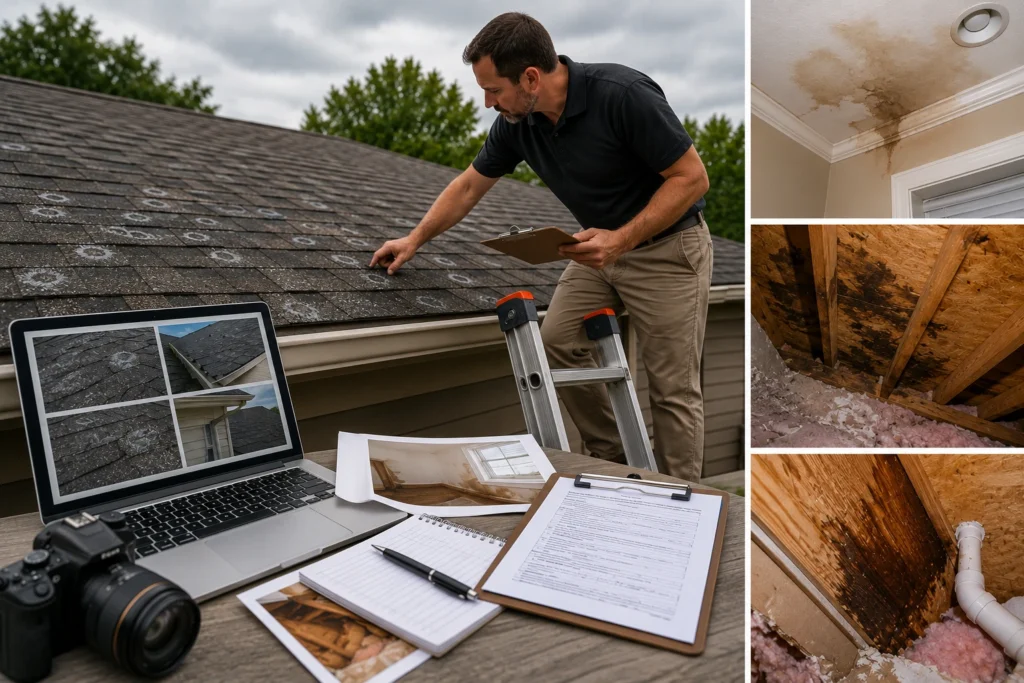
Although homeowners understandably hope every hail claim receives approval, insurers also have legitimate reasons to deny claims under certain circumstances. Understanding these issues allows you to prepare before submitting documentation.
Normal Wear and Tear
Insurance policies generally cover sudden events not predictable aging.
Roofs naturally experience:
- Sun exposure
- Thermal expansion
- Wind erosion
- Material fatigue
- Sealant deterioration
If adjusters conclude these factors caused the damage instead of hail, coverage may be denied.
Lack of Maintenance
Routine roof maintenance remains the homeowner’s responsibility. Ignoring damaged flashing, clogged gutters, missing shingles, or previous leaks can allow minor problems to worsen significantly over time. Insurance companies may determine that neglected maintenance not the original hailstorm caused the current condition.
Previous Unrepaired Damage
Another common issue involves prior claims. Suppose your roof sustained hail damage several years ago, but repairs were never completed. If another storm occurs later, insurers may separate previously documented damage from newly caused damage. This often leads to disputes regarding which repairs qualify for coverage.
Missed Claim Deadlines
Every insurance policy contains reporting requirements. Some policies require prompt notification after discovering damage, while others establish specific deadlines measured from the storm date itself. Waiting too long may complicate even otherwise valid claims.
Inability to Identify the Storm
One of the biggest obstacles involves proving when the hail actually occurred. If multiple storms passed through the area over several years, adjusters may struggle to determine which event caused the observed damage. Without sufficient evidence, establishing coverage becomes much more difficult.
How Insurance Companies Determine the Age of Hail Damage
One of the biggest misconceptions homeowners have is believing insurance adjusters simply climb onto the roof, glance around for a few minutes, and make a decision. The reality is far more detailed. Modern hail investigations combine physical inspections, historical weather data, engineering principles, satellite imagery, and documentation from multiple sources. Every piece of evidence contributes to the insurer’s final decision. Understanding this process helps explain why answering does insurance cover old hail damage often requires far more investigation than homeowners initially expect.
Professional Roof Inspections
A thorough roof inspection remains the foundation of nearly every hail damage claim. Rather than searching only for visible dents, inspectors evaluate the entire roofing system.
They examine:
- Shingle impact marks
- Granule displacement
- Soft bruising
- Exposed fiberglass mat
- Damaged flashing
- Roof vents
- Ridge caps
- Gutters
- Downspouts
- Skylights
Professional inspectors also compare damage across multiple roof slopes. Consistent impact patterns usually indicate storm activity, while isolated defects may suggest unrelated causes. Just as importantly, experienced inspectors document everything with high-resolution photographs and detailed notes. That documentation frequently becomes one of the strongest pieces of evidence during the insurance claim process.
Common Signs of Old Hail Damage
Not every hailstorm leaves dramatic destruction behind. In fact, some of the most expensive insurance claims begin with damage that looks surprisingly minor.
As months pass, however, those small defects continue to weaken roofing materials. Rain enters tiny openings. Heat expands damaged areas. Freezing temperatures create additional stress. Eventually, what started as a few hail impacts can become a widespread roofing problem. Recognizing these warning signs early gives homeowners a much better chance of preserving evidence before further deterioration makes the investigation more complicated.
Asphalt Shingles
Asphalt shingles remain the most common residential roofing material, but they are also among the most vulnerable to hail impacts. Unlike obvious storm damage such as missing shingles, hail often causes subtle injuries that become worse over time.
Inspectors commonly look for:
- Circular bruises that feel soft when gently pressed
- Missing mineral granules exposing darker asphalt
- Hairline cracks radiating from impact points
- Shiny asphalt spots where protective coatings have disappeared
- Broken seal strips between shingles
Granule loss deserves particular attention. Those tiny ceramic-coated particles protect shingles from ultraviolet rays. Once they disappear, the asphalt underneath ages much faster, shortening the roof’s lifespan and increasing the likelihood of leaks.
Metal Roofing
Metal roofs generally resist hail better than asphalt systems, but that does not make them immune.
Older hail damage on metal roofs may include:
- Dents across large roof panels
- Chipped protective paint coatings
- Scratches exposing bare metal
- Rust forming around damaged areas
- Distorted seams
While cosmetic dents may not always qualify for replacement, impacts that affect seams, fasteners, or protective coatings can create long-term performance problems.
Tile Roofs
Clay and concrete tile roofs often survive hail remarkably well, yet larger hailstones can still cause significant damage.
Inspectors typically search for:
- Broken tile corners
- Surface chips
- Fine cracks
- Fractures extending beneath the visible surface
- Displaced tiles
Hairline cracks are particularly concerning because they frequently expand after repeated heating and cooling cycles.
Gutters, Flashing, and Roof Accessories
Insurance adjusters rarely inspect shingles alone. Supporting components often provide valuable clues regarding storm severity.
These include:
- Gutters
- Downspouts
- Roof vents
- Flashing
- Chimney caps
- Skylights
- Metal valleys
Consistent denting across these components often supports the conclusion that a significant hailstorm affected the property.
Why Delayed Hail Damage Claims Can Be Challenging
If hail caused the damage, why wouldn’t insurance simply pay for repairs regardless of when the homeowner discovered it? Unfortunately, insurance claims rarely work that way. The longer damage goes unnoticed, the more opportunities there are for additional deterioration, making it increasingly difficult to determine exactly what caused the current condition.
Policy Time Limits
Every insurance policy includes requirements regarding when claims should be reported. Some policies specify a certain number of months after the storm. Others require homeowners to report damage “promptly” after discovery. Failing to meet these requirements may give the insurer grounds to question—or even deny—the claim. For that reason, delaying action after discovering roof damage rarely benefits the homeowner.
Difficulty Proving the Cause
Time changes evidence. After months or years of exposure, hail impacts may become less distinct. Meanwhile, additional weather events continue affecting the roof.
Inspectors must determine whether damage resulted from:
- One specific hailstorm
- Several storms
- Wind damage
- Tree debris
- Aging materials
- Routine weather exposure
The longer the delay, the harder that determination becomes.
Insurance Company Investigations
Insurance companies typically conduct comprehensive investigations before making coverage decisions.
Their review may include:
- Roof inspections
- Drone photography
- Engineering evaluations
- Historical weather reports
- Previous insurance claims
- Maintenance history
- Satellite imagery
- Contractor reports
Each piece of information either strengthens or weakens the evidence connecting the damage to a covered hail event.
Can You File a Claim Years After a Hailstorm?
Many homeowners assume the answer is automatically no. That isn’t always true. Although waiting years certainly makes the process more difficult, delayed claims are sometimes approved when sufficient evidence demonstrates that covered hail damage existed during the policy period.
Several Factors Influence the Outcome
Insurance companies often consider:
| Factor | Why It Matters |
| Insurance policy language | Determines reporting requirements and coverage limits |
| Date damage was discovered | Shows whether the homeowner acted reasonably after learning about the problem |
| Storm history | Helps connect roof damage to a documented weather event |
| Roof condition | Separates storm damage from ordinary aging |
| Inspection findings | Provides professional evidence supporting the claim |
No single factor guarantees approval or denial. Instead, adjusters evaluate the complete picture.
Hidden Damage May Still Qualify
Some roof systems conceal hail damage exceptionally well.
For example:
- Moisture trapped beneath underlayment
- Cracked flashing hidden beneath shingles
- Impact damage beneath ridge caps
- Structural weakening inside roof decking
Homeowners often discover these issues only after hiring a contractor for unrelated repairs or during a real estate inspection. If documentation supports the timeline, insurers may still evaluate the damage as part of a covered claim.
What Homeowners Should Do If They Discover Old Hail Damage
Finding roof damage months after a storm can feel overwhelming. Fortunately, taking the right steps immediately can significantly improve your position during the claims process. The goal isn’t simply filing an insurance claim. The goal is building credible evidence before additional deterioration occurs.
Schedule a Professional Roof Inspection
Start with an experienced roofing professional or independent inspector. Avoid relying solely on visible damage from the ground.
A detailed inspection should document:
- Every damaged roof slope
- Individual impact locations
- Supporting damage to gutters and flashing
- Photographic evidence
- Written observations
- Estimated repair recommendations
Comprehensive documentation carries far more weight than verbal opinions.
Gather Every Relevant Document
Organization matters. Create a claim file containing:
- Inspection reports
- Roof repair invoices
- Maintenance records
- Previous inspection reports
- Home purchase inspection documents
- Weather reports
- Photographs
- Insurance correspondence
Having everything readily available helps prevent unnecessary delays later.
Review Your Insurance Policy Carefully
Many homeowners never read their policy until damage occurs. Instead of focusing only on whether hail is listed as a covered peril, pay close attention to:
- Deductibles
- Exclusions
- Cosmetic damage limitations
- Replacement Cost Value (RCV)
- Actual Cash Value (ACV)
- Claim reporting requirements
Understanding these provisions prevents unpleasant surprises after filing.
Report the Claim Promptly
Once damage has been identified, don’t continue waiting. Even if you’re uncertain whether coverage applies, reporting the claim promptly demonstrates good faith and allows the investigation to begin while evidence remains relatively fresh.
How Public Adjusters Help With Old Hail Damage Claims
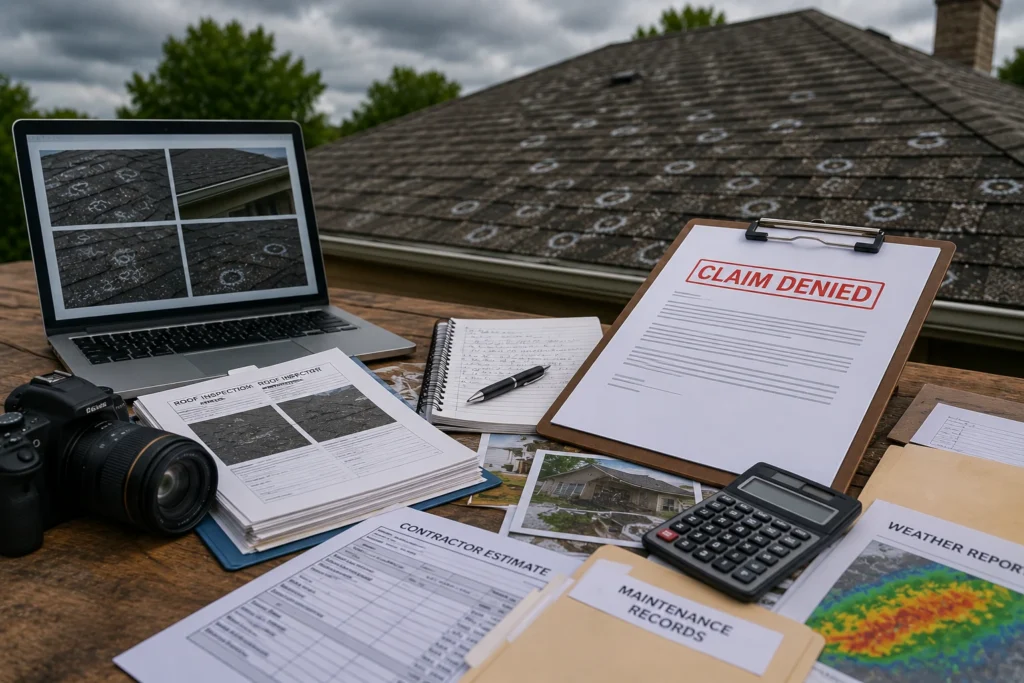
Many homeowners believe the insurance company’s adjuster represents everyone equally. In reality, the insurer’s adjuster works on behalf of the insurance company. A public adjuster, by contrast, represents the policyholder. That difference can become especially valuable when older hail damage requires detailed documentation and careful policy interpretation.
Independent Damage Evaluation
Public adjusters conduct their own inspections rather than relying solely on the insurer’s findings.
They often identify:
- Additional roof damage
- Interior moisture intrusion
- Hidden structural issues
- Damaged building components
- Overlooked repair items
A more comprehensive evaluation creates a clearer picture of the property’s actual condition.
Interpreting Insurance Policies
Insurance policies contain detailed language that many homeowners understandably find difficult to interpret.
A public adjuster helps explain:
- Covered losses
- Exclusions
- Endorsements
- Deductibles
- Depreciation provisions
- Settlement methods
Understanding these provisions helps homeowners make informed decisions throughout the claim.
Building Strong Documentation
Successful claims rarely depend on one photograph or one inspection. Instead, public adjusters assemble detailed documentation that may include:
- Professional estimates
- Engineering reports
- Weather documentation
- Repair histories
- Contractor evaluations
- Photographic evidence
- Policy analysis
Each document contributes to a stronger, more organized presentation of the claim.
Negotiating With the Insurance Company
Insurance claims often involve ongoing discussions regarding the scope of damage, repair methods, and settlement values.
Public adjusters assist by:
- Responding to insurer questions
- Presenting supporting evidence
- Reviewing estimates
- Requesting supplemental inspections when necessary
- Addressing overlooked damages
This process helps ensure the claim receives a thorough evaluation based on the available evidence rather than incomplete documentation. By this stage, homeowners have a much clearer understanding that the answer to does insurance cover old hail damage depends on preparation as much as the damage itself. The final outcome often reflects the quality of the evidence presented, the policy language, and the ability to demonstrate that the loss resulted from a covered hail event rather than ordinary roof aging.
Common Reasons Old Hail Damage Claims Are Denied
No homeowner wants to hear that a claim has been denied, especially after discovering expensive roof damage. However, understanding why insurers reject certain claims can help you avoid common pitfalls before you file. In many cases, the denial is not because hail never damaged the roof. Instead, the insurance company may determine that the available evidence is insufficient to establish coverage under the policy. Here are some of the most common reasons.
Lack of Documentation
Documentation often determines whether a claim succeeds or fails. If you cannot provide evidence showing the condition of your roof, the approximate date the damage occurred, or the extent of the loss, the insurer may have difficulty confirming that the damage resulted from a covered event.
Helpful documentation includes:
- Roof inspection reports
- Time-stamped photographs
- Contractor estimates
- Maintenance records
- Weather reports
- Previous insurance correspondence
- Repair invoices
The more complete your records, the easier it becomes to demonstrate the history of the damage.
Normal Wear and Tear
Insurance is intended to cover sudden, accidental events not predictable aging.
Over the years, every roof experiences:
- Sun exposure
- Temperature fluctuations
- Wind-driven debris
- Rain
- Moisture
- Material fatigue
If these conditions appear to be the primary cause of the roof’s deterioration, the insurance company may classify the problem as normal wear and tear rather than storm damage.
Poor Maintenance
Routine maintenance is part of responsible homeownership. If missing shingles, damaged flashing, clogged gutters, or known leaks were ignored for long periods, insurers may conclude that the homeowner allowed otherwise repairable damage to become substantially worse. Preventive maintenance protects both your roof and your insurance claim.
Missed Reporting Deadlines
Many policies contain deadlines for reporting losses. Although these deadlines vary, delaying notification for months or even years may complicate the investigation and increase the likelihood of a denial. Whenever damage is discovered, it is generally wise to begin documenting the condition immediately and notify the insurance company without unnecessary delay.
Cosmetic Damage Exclusions
Some modern homeowners insurance policies contain cosmetic damage exclusions. These provisions may state that purely cosmetic dents or blemishes that do not affect the roof’s ability to perform its intended function are not covered. Because policy language differs from one insurer to another, reviewing your specific policy is essential before making assumptions about coverage.
How to Strengthen an Old Hail Damage Insurance Claim
Although older hail claims can present challenges, homeowners are not without options. Taking proactive steps before and during the claims process can significantly improve the quality of your evidence and reduce unnecessary disputes.
Keep Detailed Maintenance Records
A well-maintained roof tells an important story. Maintenance records demonstrate that the homeowner has consistently cared for the property rather than neglecting developing issues.
Helpful records include:
- Annual roof inspections
- Gutter cleaning invoices
- Roof repair receipts
- Maintenance schedules
- Contractor reports
These documents establish a pattern of responsible ownership.
Obtain an Independent Inspection
While insurance companies conduct their own inspections, obtaining an independent evaluation provides an additional layer of documentation. Independent roofing professionals often identify damage that might otherwise be overlooked.
Their reports may include:
- Photographs
- Roof diagrams
- Measurements
- Repair recommendations
- Estimated replacement costs
Independent evaluations also provide homeowners with valuable information before discussing repairs with the insurance company.
Preserve Storm Documentation
The more evidence connecting the damage to a specific hailstorm, the stronger the claim becomes.
Consider collecting:
- Local weather reports
- Hail maps
- Radar images
- News reports
- Photographs taken shortly after the storm
- Neighbor repair records when appropriate
These resources help establish that severe weather occurred in your area during the relevant timeframe.
Photograph Damage Immediately
Photographs remain one of the strongest forms of supporting evidence.
Take clear pictures of:
- Roof surfaces
- Gutters
- Downspouts
- Flashing
- Skylights
- Interior water damage
- Ceiling stains
- Attic moisture
Capture both close-up images and wide-angle views showing the overall condition of the property. Continue documenting any changes throughout the repair process.
Avoid Unnecessary Delays
One of the most effective ways to strengthen a claim is simply acting promptly. Waiting allows weather conditions to continue affecting the damaged roof. Rain, sunlight, wind, and seasonal temperature changes can gradually alter the original hail impacts, making it more difficult for inspectors to determine exactly when the damage occurred. Prompt action preserves evidence while demonstrating that you acted responsibly after discovering the problem.
Frequently Asked Questions Homeowners Often Ask
Even after learning how insurers investigate roof damage, homeowners continue asking one important question:
Does insurance cover old hail damage?
The reality is that there is no universal answer. Every claim depends on the available evidence, policy language, maintenance history, inspection findings, and whether the damage can reasonably be connected to a covered hail event. Understanding these factors before filing helps homeowners set realistic expectations and avoid unnecessary surprises during the claims process.
Protect Your Investment Before Minor Damage Becomes Major Damage
A roof represents one of the largest investments in any home. Unfortunately, small hail impacts rarely remain small forever. Tiny fractures gradually expand. Protective granules continue washing away. Moisture begins entering vulnerable areas. Repairs that might have been relatively simple can eventually require extensive restoration or even full roof replacement. Regular roof inspections help identify these issues while they are still manageable.
Many roofing professionals recommend scheduling inspections:
- After significant hailstorms
- Following severe wind events
- Before buying or selling a home
- As part of annual maintenance
- Whenever interior leaks appear
These inspections not only protect the structure itself but also preserve valuable evidence should an insurance claim become necessary later.
When Should You Contact a Public Adjuster?
Some insurance claims proceed smoothly from beginning to end. Others become far more complicated.
You may benefit from consulting a public adjuster if:
- The insurance company denied your claim.
- The settlement appears lower than expected.
- Multiple inspections produced conflicting opinions.
- The roof has both old and recent storm damage.
- Significant interior damage has developed.
- You are uncertain how your policy applies to the loss.
A qualified public adjuster can review your documentation, explain policy provisions, organize supporting evidence, and communicate directly with the insurance company throughout the claims process. For homeowners facing complex or disputed claims, that professional guidance may provide valuable clarity.
Final Thoughts
So, does insurance cover old hail damage? In many situations, yes but only when the facts support coverage under the policy. Insurance companies look beyond the age of the damage itself. They evaluate whether the loss resulted from a covered hail event, whether the homeowner maintained the property responsibly, and whether sufficient documentation exists to connect the damage to a specific storm.
If you discover roof damage months after severe weather, don’t automatically assume your opportunity to file a claim has passed. Begin by arranging a professional inspection, gathering maintenance records, reviewing your insurance policy, and documenting every visible sign of damage. Acting quickly after discovery can preserve important evidence and improve the quality of your claim. For homeowners in Cedar Hill, where hailstorms can produce significant roof damage, regular inspections are one of the best ways to identify hidden problems before they develop into major structural issues. Whether the damage appears recent or several months old, early documentation often makes a meaningful difference.
If your insurance company questions the cause of the damage or offers a settlement that doesn’t reflect the full scope of repairs, seeking professional assistance may be the next logical step. An experienced public adjuster can help evaluate the evidence, interpret your policy, and advocate for a fair review of your claim. Ultimately, understanding how insurers investigate storm damage empowers homeowners to make informed decisions. Rather than wondering whether old hail damage is automatically excluded, you’ll know the factors that truly influence coverage and you’ll be better prepared to protect both your home and your financial investment.
FAQs
Old hail damage is roof or property damage from a past hailstorm that wasn’t discovered or reported until months or even years later.
Yes, it can. Coverage depends on your policy, the cause of the damage, and whether you can show it resulted from a covered hailstorm.
Adjusters evaluate the roof’s condition, impact patterns, weather records, inspection reports, and other evidence to estimate when the damage occurred.
Possibly. Some insurers may consider the claim if the policy allows it and you can prove the damage occurred during a covered policy period.
Not necessarily. An older roof can still qualify for coverage if hail caused the damage rather than normal wear and tear.
Professional inspection reports, photographs, maintenance records, repair invoices, and historical weather reports all help strengthen your claim.
You should only make temporary repairs necessary to prevent further damage and document everything before making permanent repairs whenever possible.
Yes. If hidden damage is later discovered and can be linked to a covered hail event, your insurer may still evaluate it for coverage.
A public adjuster can inspect the damage, interpret your policy, prepare documentation, and negotiate with the insurance company on your behalf.
Schedule regular roof inspections, maintain detailed records, document storm damage promptly, and report potential claims as soon as you discover them.