
Hailstorms can leave behind obvious destruction, but some of the most expensive damage is the kind homeowners never notice until months later. Learning how to identify hail damage by roof type is one of the smartest ways to protect your home, preserve your roof’s lifespan, and strengthen a future insurance claim. Every roofing material responds differently to hail impacts, so recognizing those differences can save thousands of dollars in unnecessary repairs or overlooked damage.
After a severe storm, it’s tempting to scan the yard, glance at the roof, and assume everything survived. Unfortunately, hail doesn’t always leave dramatic holes or missing shingles. Small impact marks, fractured materials, or weakened protective surfaces may continue to deteriorate long after the skies clear. The sooner you know what to look for, the sooner you can take action before minor problems become major ones.
Homeowners in Cedar Hill understand how quickly Texas weather can change. One afternoon may bring sunshine, while the next delivers hail large enough to damage roofing, siding, gutters, and outdoor equipment. Because of this unpredictable weather, regular roof inspections should become part of every homeowner’s maintenance routine rather than something reserved for obvious disasters.
Storm damage often creates another challenge beyond repairs. When Insurance Gets Complicated, having accurate documentation and understanding how various roofing materials react to hail can make an enormous difference during the claims process. Knowing what constitutes genuine storm damage helps homeowners communicate more effectively with inspectors, contractors, and insurance representatives.
This guide explains exactly how different roofing materials respond to hail, what warning signs deserve immediate attention, and how to inspect your property safely. Whether your home has asphalt shingles, metal panels, clay tile, slate, wood shake, or a flat roofing system, you’ll learn practical techniques that help identify problems before they become expensive surprises.
Why Roof Type Matters When Inspecting for Hail Damage
Many homeowners assume hail affects every roof the same way. It doesn’t. Different roofing materials vary significantly in hardness, flexibility, thickness, and protective coatings. A hailstone that barely leaves a dent on one roof may crack another material beyond repair. Think about dropping the same object onto a sheet of glass, a piece of rubber, and a wooden board. Each reacts differently because of its physical properties. Roofing behaves much the same way.
For example, asphalt shingles rely on mineral granules to shield them from ultraviolet exposure. Once hail knocks those granules loose, the shingle begins aging much faster. Metal roofing may remain watertight despite visible dents, while clay tiles can fracture internally without showing obvious exterior damage. Understanding these differences allows homeowners to perform more accurate inspections instead of assuming every dent or mark automatically requires replacement. Insurance companies also evaluate hail damage differently depending on the roofing material involved. Cosmetic damage may not justify replacement on certain roofs, while similar impacts on more fragile materials could compromise the roof’s ability to protect the home.
That distinction matters. Proper identification prevents both unnecessary repairs and overlooked structural issues that may worsen over time.
Understanding How Hail Causes Roof Damage
Not every hailstorm produces the same results. Several factors determine how much damage your roof ultimately experiences.
Hail Size
Larger hailstones naturally carry greater force, but size alone doesn’t tell the entire story. Even relatively small hail can damage aging roofs or softer roofing materials.
Here’s a general comparison:
| Hail Size | Potential Roof Damage |
| Pea (¼”) | Usually minimal cosmetic damage |
| Marble (½”) | Minor granule loss and dents |
| Quarter (1″) | Noticeable asphalt and metal damage |
| Golf Ball (1¾”) | Significant cracking, bruising, and broken tiles |
| Baseball (2¾”+) | Severe structural roof damage |
Larger hailstones also strike with greater surface force, increasing the likelihood of punctures and fractures.
Wind Speed During the Storm
Wind dramatically changes the angle and force of hail impacts. Straight-down hail may strike evenly across the roof. Wind-driven hail behaves differently. It often targets one side of the home more aggressively, leaving concentrated damage on slopes facing the storm. Recognizing these impact patterns helps inspectors determine whether roof marks actually resulted from hail or from unrelated wear.
Roof Age
Older roofs simply absorb impacts less effectively. Materials become brittle over time due to years of sunlight, moisture, and changing temperatures. As a result, hail that newer shingles might withstand can crack older roofing with much less force. Age doesn’t necessarily mean the roof was poorly maintained. It simply changes how the material responds under stress.
Roof Pitch
Steeper roofs sometimes experience different damage patterns than lower-pitched systems. The angle changes how hailstones strike the surface. Rather than absorbing a direct impact, some hailstones glance off steeper slopes, while flatter roofs often receive more concentrated force across larger areas.
Inspectors carefully compare different roof sections because one slope may appear nearly untouched while another shows widespread damage.
Existing Roof Condition
Pre-existing issues matter. Loose shingles, deteriorated flashing, aging sealants, and worn roofing materials often become weak points during hailstorms. A storm doesn’t always create the initial vulnerability. Instead, it frequently exposes weaknesses that already existed.
Safety First Before Inspecting Your Roof
Curiosity is understandable after a major storm. Safety should always come first. Every year, homeowners suffer preventable injuries while attempting to inspect roofs that remain slippery, unstable, or structurally weakened after severe weather. The safest inspection often begins without climbing onto the roof at all. Instead, walk completely around your home while observing the roof from multiple angles. A good pair of binoculars allows surprisingly detailed inspections from ground level.
Pay close attention to:
- Missing shingles
- Bent gutters
- Damaged flashing
- Broken roof vents
- Fallen tree limbs
- Debris accumulation
- Loose ridge caps
If you decide to use a ladder, ensure someone else remains nearby. Never inspect a roof during rain or immediately afterward. Wet roofing materials become extremely slippery, even on surfaces that normally provide excellent traction.
Take photographs from every visible angle before disturbing anything. Those images establish an important record of the roof’s condition immediately after the storm. If you notice significant structural concerns, avoid climbing altogether. Professional inspectors possess specialized safety equipment and experience that dramatically reduces the risk of injury. Sometimes the smartest decision is recognizing when not to step onto the roof.
How to Identify Hail Damage on Asphalt Shingle Roofs
Asphalt shingles remain the most common residential roofing material in the United States. They’re durable, affordable, and generally perform well against ordinary weather. Hail, however, presents unique challenges. Because asphalt shingles depend heavily on their protective granule layer, even moderate hail impacts can shorten their lifespan considerably. Understanding how to identify hail damage by roof type becomes especially important with asphalt roofing because some damage remains difficult to recognize until leaks develop months later.
Missing Granules
Granule loss is often the earliest visible sign of hail damage. These tiny mineral particles shield shingles from sunlight and help regulate roof temperature. After a hailstorm, inspect gutters and downspouts.
Large accumulations of fresh granules may indicate recent impacts. On the roof itself, damaged areas often appear darker than surrounding shingles because the underlying asphalt becomes exposed once granules break away. Fresh granule loss usually has well-defined edges rather than the gradual wear associated with aging.
Circular Black Spots
One of the classic indicators of hail damage involves dark circular marks scattered across asphalt shingles. These spots develop when hail removes granules from concentrated impact points. Most measure between one-half inch and two inches in diameter. Consistency matters. Natural aging rarely produces dozens of nearly identical circular impact marks across multiple roof sections. Storm damage often does.
The Bruising Test
Professional inspectors frequently perform what’s known as a bruise test. Carefully pressing suspected impact areas with a finger may reveal soft or spongy spots beneath the shingle surface.
Healthy shingles generally feel firm. Damaged shingles may compress slightly because the fiberglass mat underneath has fractured while the surface still appears mostly intact. Homeowners should perform this test gently. Excessive pressure can create unnecessary damage.
Cracked or Torn Shingles
Larger hailstones sometimes crack the asphalt itself. These fractures often radiate outward from the impact point. Unlike wind damage, which commonly tears shingles near edges or fasteners, hail cracks usually originate near the center of the impact area. Inspect several shingles rather than focusing on isolated marks. Storm damage typically affects multiple areas across the roof rather than producing a single isolated crack.
Exposed Fiberglass Mat
Once hail removes enough asphalt and granules, the fiberglass reinforcement beneath may become visible. This is a serious concern. The exposed mat loses much of its weather resistance and allows moisture to penetrate far more easily. Prompt repairs help prevent water infiltration and premature roof deterioration.
Soft Impact Marks
Not every impact leaves visible cracks. Some hailstones compress the shingle without breaking the surface immediately. These subtle indentations may only become obvious under certain lighting conditions.
Early morning or late afternoon sunlight often highlights shallow depressions much better than midday sunshine. Walking around the home during different times of day sometimes reveals damage missed during an initial inspection.
Common Mistakes Homeowners Make
Several common inspection mistakes cause homeowners to overlook legitimate hail damage.
These include:
- Assuming all dark spots are dirt rather than impact marks.
- Mistaking normal aging for storm damage.
- Inspecting only one roof slope.
- Ignoring gutters where fresh granules collect.
- Looking only for missing shingles instead of subtle bruising.
- Waiting several months before documenting damage.
- Attempting repairs before photographing the roof.
Learning how to identify hail damage by roof type takes patience, observation, and attention to detail. Asphalt shingles often provide the first visible clues after a storm, but they’re only one part of the overall inspection process. Understanding how other roofing materials respond to hail is equally important and may reveal hidden problems that aren’t immediately apparent.
Identifying Hail Damage on Metal Roofs
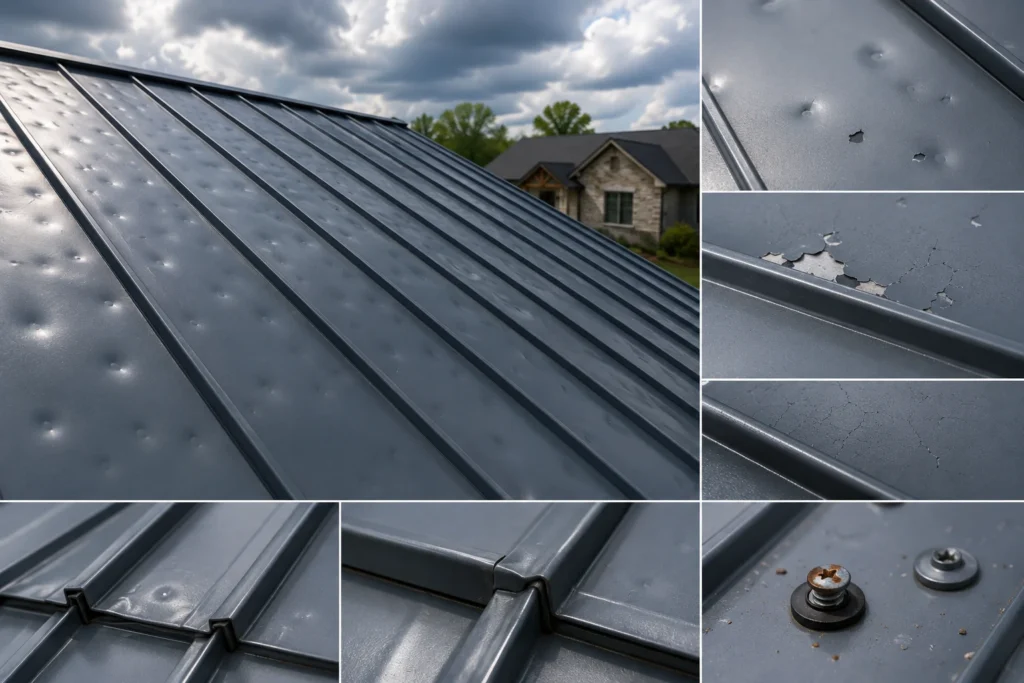
Metal roofing has earned a reputation for exceptional durability, but that doesn’t mean it is immune to hail. In fact, one of the biggest misconceptions is that a metal roof cannot sustain meaningful storm damage simply because it doesn’t crack like other materials. The reality is more nuanced. Knowing how to identify hail damage by roof type is essential because metal roofs often show damage differently than asphalt shingles.
Dents
The most recognizable sign of hail damage on metal roofing is denting. The size, depth, and location of dents all matter. Small cosmetic dents scattered across a roof may not affect its ability to keep water out, while deeper impacts can distort panels enough to interfere with drainage or stress the fasteners holding the system together. Walk around the home and observe the roof from different angles. Sunlight often makes dents much easier to spot than an overcast sky.
Protective Coating Damage
Most metal roofs are protected by specialized coatings designed to resist corrosion and ultraviolet exposure. A hailstone may not puncture the panel, but it can fracture or chip this protective finish. Once the coating is compromised, moisture can begin attacking the underlying metal over time. Inspect areas where paint appears scratched, chipped, or unusually dull compared to the surrounding surface.
Paint Fractures
Some hail impacts create tiny cracks in the painted finish that are difficult to notice without close inspection. These hairline fractures may appear insignificant initially, yet they can allow moisture to penetrate beneath the coating. Seasonal expansion and contraction may gradually enlarge the damaged area. Professional inspectors frequently use magnification tools to identify paint fractures invisible from ground level.
Standing Seam Damage
Standing seam metal roofs contain raised vertical seams that lock adjacent panels together. Although these seams are strong, severe hail can bend or distort them. Even minor deformation may interfere with proper water shedding or create openings where wind-driven rain could eventually enter. Inspect seam alignment carefully after major storms.
Fastener Damage
Exposed-fastener metal roofs deserve special attention. Hail impacts may loosen screws or damage rubber washers that create waterproof seals around each fastener. A roof can remain visually attractive while hidden leaks slowly develop around compromised fasteners.
Cosmetic vs. Functional Damage
Not every dent requires replacement. Insurance companies frequently distinguish between cosmetic and functional damage on metal roofing. Cosmetic damage affects appearance but not performance. Functional damage compromises waterproofing, structural integrity, drainage, or long-term durability. Understanding that distinction helps homeowners communicate more effectively during inspections and insurance evaluations.
Identifying Hail Damage on Tile Roofs
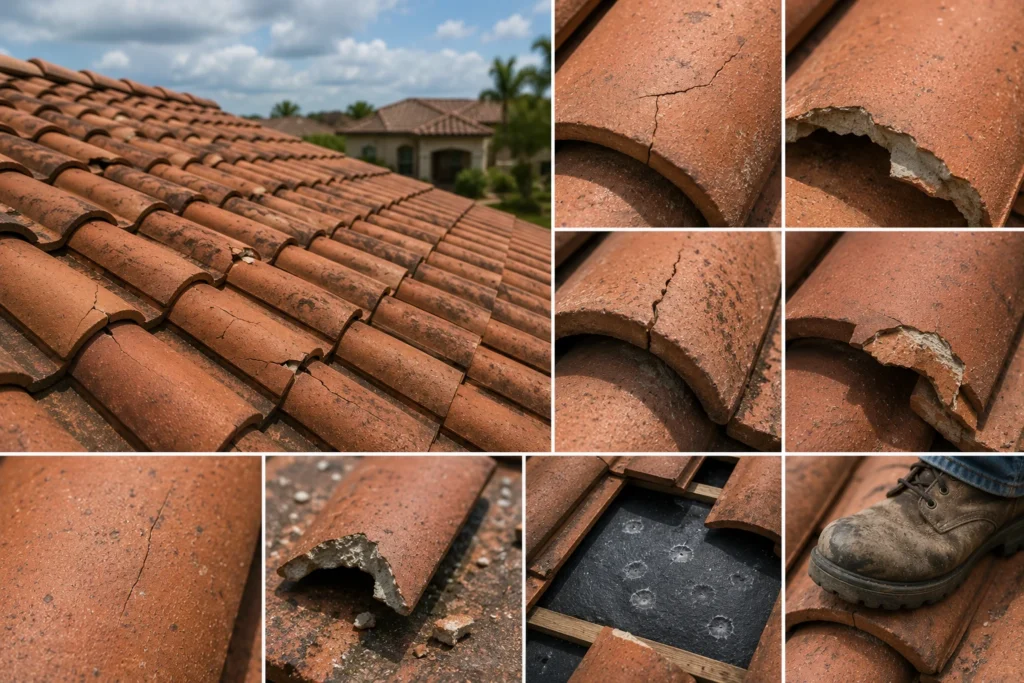
Tile roofing offers outstanding longevity, but hail presents unique risks. Unlike asphalt, which often bruises, or metal, which dents, tile tends to crack. Unfortunately, not every crack is immediately obvious. Some remain hidden until water begins infiltrating beneath the tiles months later.
Cracked Clay Tiles
Clay tiles often develop clean fractures after significant hail impacts. These cracks may run straight across the tile or branch outward from the impact point. Even relatively small fractures deserve attention because they weaken the tile’s ability to resist future weather events. One freeze-thaw cycle or another storm can easily turn a small crack into a broken tile.
Concrete Tile Chips
Concrete tiles usually respond differently. Rather than splitting completely, they often chip along edges or corners. Fresh chips typically expose lighter-colored material beneath the weathered exterior. This contrast makes recent damage easier to identify.
Hairline Fractures
Hairline cracks present one of the biggest inspection challenges. They may appear harmless at first glance. However, repeated rainfall allows moisture to penetrate these tiny openings, gradually weakening the tile from within. Over time, the crack widens. Eventually, the tile may fail completely.
Hidden Underlayment Damage
Even when tiles remain largely intact, the waterproof underlayment beneath them may suffer impact damage. This hidden layer serves as the roof’s secondary defense against moisture. A professional inspection often includes evaluating both the visible tile surface and the underlying protection.
Why Walking on Tile Roofs Can Make Damage Worse
Many homeowners unintentionally create additional damage while inspecting tile roofs. Tiles distribute weight unevenly. Stepping in the wrong location can crack perfectly healthy tiles that survived the storm. Whenever possible, inspect tile roofing from the ground or use binoculars. Professional inspectors know where and how to walk safely if direct roof access becomes necessary.
Identifying Hail Damage on Wood Shake Roofs
Wood shake roofs offer natural beauty and excellent insulation, but they respond to hail differently than manufactured roofing products. Because wood is an organic material, impacts often create subtle damage that gradually worsens with exposure to moisture.
Fresh Splits
Fresh splits usually appear lighter than surrounding weathered wood. These newly exposed surfaces have not yet darkened from sunlight or moisture. Inspect individual shakes for clean cracks that were not present before the storm.
Impact Depressions
Hail sometimes compresses wood fibers instead of breaking them. These shallow depressions may collect water during rainstorms. Repeated moisture exposure accelerates deterioration around the damaged area.
Broken Shake Corners
Corners remain particularly vulnerable. Even moderate hail can break off edges or corners of individual shakes. Although a missing corner seems minor, it creates an opening where wind-driven rain may enter beneath adjacent roofing materials.
Moisture Intrusion Risks
Wood naturally expands and contracts as moisture levels change. Once hail creates cracks or depressions, water enters more easily. Rot, fungal growth, and premature deterioration often follow if repairs are delayed. Routine inspections become especially valuable for wood roofing because early repairs typically prevent much larger restoration projects later.
Identifying Hail Damage on Slate Roofs
Slate roofs are among the most durable roofing systems available. Many remain functional for a century or more. However, slate is also brittle. Large hailstones can fracture even high-quality slate under the right conditions.
Corner Breaks
Corners frequently absorb concentrated impact forces. Inspect for freshly broken edges where darker interior stone becomes visible. These breaks often appear cleaner than damage caused by normal aging.
Impact Fractures
Unlike manufacturing imperfections, hail fractures usually originate from a specific impact point. Spiderweb-like crack patterns sometimes spread outward from the center. Even small fractures weaken the surrounding slate.
Delamination
Some slate tiles separate into thin layers following repeated impacts. This process, known as delamination, reduces strength while allowing increased moisture penetration. Over time, affected tiles become increasingly fragile.
Loose Slate Pieces
Powerful hailstorms occasionally loosen fasteners holding slate in place.Loose tiles may shift slightly without falling immediately. Inspect rooflines for uneven alignment or displaced pieces after major storms.
Flat Roof Hail Damage Identification
Flat roofing systems require a different inspection approach altogether. Instead of focusing on individual shingles or tiles, inspectors evaluate the roofing membrane itself. Because water drains more slowly on flat roofs, even small membrane damage deserves prompt attention.
Modified Bitumen
Modified bitumen roofs often display circular impact marks after hail. Inspect for punctures, tears, or crushed mineral surfaces. Repeated impacts may weaken the membrane enough to allow slow leaks.
TPO Roofing
Thermoplastic Polyolefin (TPO) membranes resist many weather conditions remarkably well. However, severe hail can stretch or puncture the material. Look for wrinkles, abrasions, or unusually soft areas.
EPDM Roofing
EPDM rubber roofing absorbs impacts differently. Rather than cracking, it may stretch excessively or develop punctures. Check seams carefully because hail occasionally weakens adhesive bonds.
PVC Roofing
PVC membranes generally perform well against hail but remain susceptible to punctures from exceptionally large stones. Inspect welded seams for separation following severe storms.
Signs of Membrane Damage
Common warning signs include:
- Circular impact marks
- Surface punctures
- Membrane wrinkles
- Exposed insulation
- Open seams
- Standing water in new locations
- Soft spots beneath the membrane
Even if leaks have not yet appeared, membrane damage should be evaluated promptly.
Other Areas of the Home That Reveal Hail Damage
A roof rarely tells the entire story. In fact, surrounding components often provide the first clues that hail struck with enough force to justify a closer inspection. Take a slow walk around your property and examine every exterior surface.
Look closely at:
- Gutters
- Downspouts
- Metal flashing
- Roof vents
- Skylights
- Chimney caps
- Window screens
- Vinyl or fiber cement siding
- Garage doors
- Mailboxes
- Outdoor light fixtures
- Air conditioning condenser units
Fresh dents on soft metals often confirm the direction and intensity of the storm. Window screens may display tiny tears from hail impacts. Air conditioner condenser fins frequently become bent after severe storms, providing another valuable piece of evidence. When multiple exterior components show consistent impact patterns, there’s a greater likelihood the roof also sustained damage.
Cosmetic Damage vs. Functional Damage
This distinction causes confusion for many homeowners. A roof can look damaged while continuing to perform perfectly. Conversely, a roof may appear almost flawless while hidden structural damage allows water to enter. Understanding how to identify hail damage by roof type means learning to separate appearance from performance.
| Cosmetic Damage | Functional Damage |
| Small dents | Roof punctures |
| Paint blemishes | Cracked waterproof layers |
| Minor surface marks | Broken flashing |
| Slight discoloration | Water intrusion |
| Shallow impressions | Damaged seams |
| Small granule loss | Structural fractures |
Functional damage affects the roof’s ability to protect the home. Cosmetic damage primarily affects appearance. Both deserve documentation, but insurance coverage may differ depending on policy language.
Signs That Damage May Have Been Missed
Not every hailstorm leaves obvious evidence. Sometimes the warning signs appear weeks or even months later.
Watch for these indicators:
- Small ceiling stains
- Damp attic insulation
- Musty odors
- Mold growth
- Loose shingles after subsequent storms
- Rust around flashing
- Water near roof penetrations
- Rising cooling costs caused by moisture-compromised insulation
One subtle issue often leads to another. Addressing hidden damage early almost always costs less than waiting until leaks become obvious.
How Insurance Companies Evaluate Roof Hail Damage
Once you’ve completed your inspection, the next step is understanding how an insurance company is likely to evaluate the damage. Many homeowners assume that visible dents or missing granules automatically qualify for a covered claim. Unfortunately, the process is rarely that simple.
Insurance adjusters look for evidence that the damage was caused by a specific hail event rather than gradual wear and tear. They also evaluate whether the damage affects the roof’s ability to perform its intended function. Understanding how to identify hail damage by roof type gives homeowners a significant advantage because they can document issues more thoroughly before an inspection takes place.
What Adjusters Look For
Insurance adjusters generally evaluate several important factors during a roof inspection.
These often include:
- The reported date of the storm
- Local weather data confirming hail activity
- The size and consistency of impact marks
- The overall age of the roof
- Previous repairs
- Signs of maintenance or neglect
- Whether damage appears random or follows a storm pattern
A roof showing consistent impact marks across multiple slopes usually tells a different story than isolated defects scattered randomly across the surface. Documentation is your best friend throughout this process.
Why Documentation Matters
The strongest claims are supported by clear evidence. Immediately after a storm, take photographs from multiple angles before making temporary repairs whenever it is safe to do so.
Helpful documentation includes:
- Wide-angle photographs of the roof
- Close-up images of impact marks
- Damaged gutters and downspouts
- Window screen damage
- Air conditioning unit dents
- Broken landscaping features
- Interior water stains
- Contractor inspection reports
- Repair estimates
- Receipts for emergency mitigation
The more organized your records become, the easier it is to demonstrate the full extent of the damage.
Common Misidentifications That Are Not Hail Damage
Not every roof defect is the result of hail. In fact, several common roofing conditions closely resemble storm damage. Understanding these differences prevents unnecessary insurance claims and helps homeowners communicate more accurately with roofing professionals.
Common examples include:
- Manufacturing defects
- Normal granule loss from aging
- Foot traffic damage
- Tree branch abrasion
- Wind-only damage
- Blistering caused by trapped moisture
- Improper installation
- Mechanical damage from tools or equipment
One particularly confusing example involves asphalt blistering. Small raised bubbles sometimes resemble hail impacts until examined closely. Likewise, heavy foot traffic can create scuff marks that inexperienced inspectors may mistake for storm damage.
For homeowners interested in the science behind how brittle materials fracture under impact, the concept of fracture mechanics provides useful background. It explains how cracks initiate and propagate in materials subjected to sudden forces such as hail impacts. Although homeowners are not expected to become roofing experts overnight, recognizing these differences helps avoid costly misunderstandings.
What to Do After Discovering Possible Hail Damage
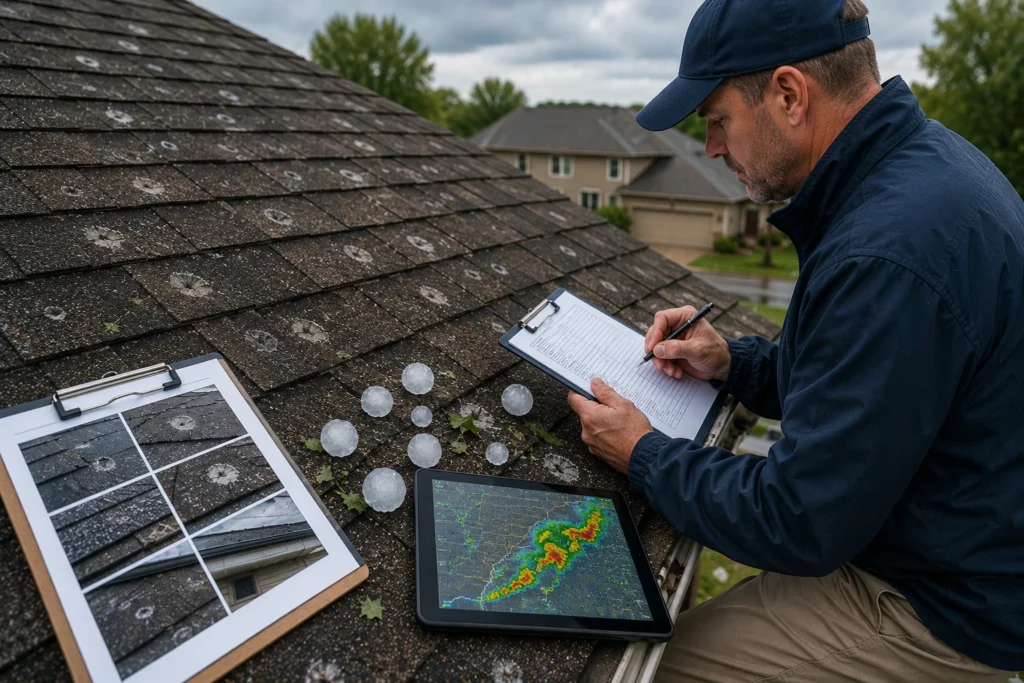
Finding possible storm damage can feel overwhelming. Fortunately, a systematic approach keeps the situation manageable.
Step 1: Stay Safe
Avoid climbing onto steep or unstable roofs. If the roof appears compromised, remain on the ground and perform a visual inspection using binoculars. Personal safety should always come before property inspection.
Step 2: Photograph Everything
Take clear, high-resolution photographs before moving debris or beginning temporary repairs.
Capture:
- Every roof slope visible from the ground
- Gutters
- Downspouts
- Windows
- Skylights
- Outdoor equipment
- Fence damage
- Fallen tree limbs
Time-stamped photographs often become valuable evidence later.
Step 3: Prevent Additional Damage
Insurance policies generally require homeowners to take reasonable steps to prevent further loss.
Temporary measures may include:
- Installing tarps over exposed areas
- Removing standing water
- Covering broken skylights
- Relocating valuable belongings away from active leaks
Keep receipts for any emergency expenses.
Step 4: Schedule a Professional Roof Inspection
Professional roofing contractors possess specialized training that allows them to identify subtle damage many homeowners overlook. They understand how each roofing material responds to hail and know exactly where hidden problems commonly develop. An experienced inspection frequently uncovers issues invisible from ground level.
Step 5: Review Your Insurance Policy
Before submitting a claim, take time to understand your policy.
Review:
- Deductibles
- Coverage limits
- Exclusions
- Cosmetic damage provisions
- Claim reporting deadlines
Knowing these details beforehand helps prevent unpleasant surprises later.
Step 6: Consider Working With a Public Adjuster
Large or complex claims sometimes benefit from additional professional assistance. A public adjuster works on behalf of the policyholder rather than the insurance company.
Their role may include:
- Reviewing policy language
- Documenting damage
- Preparing claim estimates
- Coordinating inspections
- Assisting during negotiations
Every claim is different, but understanding your available resources allows you to make informed decisions.
Why Professional Roof Inspections Often Find Hidden Damage
Even the most attentive homeowner can overlook subtle hail damage. That isn’t a lack of effort. It’s simply because roofing systems are complex. Professional inspectors evaluate much more than the visible roofing material. They examine flashing, ventilation, underlayment, drainage systems, sealants, fasteners, attic conditions, and moisture patterns that may indicate concealed damage.
Many also use advanced tools such as moisture meters, infrared imaging, and drone photography to document areas that would otherwise remain inaccessible. This comprehensive approach often reveals problems long before leaks become visible inside the home. Homeowners throughout Cedar Hill frequently schedule inspections following significant hailstorms because even roofs that appear undamaged from the ground can conceal impact-related deterioration. Early identification often prevents far more expensive repairs down the road.
Why Acting Quickly Matters
Time plays an important role after every hailstorm. Small cracks expand. Protective coatings deteriorate. Moisture finds openings that were previously sealed. What begins as a minor repair can gradually develop into structural damage involving insulation, drywall, framing, flooring, and personal belongings.
Prompt inspections also improve documentation. Fresh impact marks are easier to distinguish from normal weathering shortly after a storm. Waiting several months may make that distinction more difficult. The sooner potential damage is evaluated, the more options homeowners generally have available.
Conclusion
Every roofing material tells a different story after a hailstorm. Asphalt shingles lose protective granules. Metal roofs dent. Clay tiles crack. Wood shakes split. Slate fractures. Flat roofing membranes may puncture or stretch. Understanding these differences is the foundation of learning how to identify hail damage by roof type, and it allows homeowners to respond confidently rather than relying on guesswork. Routine inspections, careful documentation, and prompt professional evaluations all contribute to protecting one of your home’s most valuable investments. Even damage that appears minor today can evolve into leaks, mold, structural deterioration, or costly repairs if left unaddressed.
If you suspect your roof has been affected by a recent storm, don’t rely solely on a quick glance from the driveway. Perform a safe visual inspection, document what you observe, and seek professional guidance whenever questions remain. Homeowners in Cedar Hill who act quickly after hailstorms often place themselves in a stronger position to protect both their property and any potential insurance claim. At the end of the day, knowledge is one of the most effective tools you have. The better you understand how to identify hail damage by roof type, the easier it becomes to protect your home, preserve your roof’s lifespan, and make informed decisions after severe weather strikes.
FAQs
Look for signs such as missing granules, dents, cracks, bruising, broken tiles, or punctures. The appearance depends on your roof type.
Yes. Even small hail can damage older or worn roofing materials, especially asphalt shingles, by removing protective granules or causing hidden bruising.
Not necessarily, but it’s a good idea to inspect your roof after any storm that produces hail, especially if neighboring homes show signs of damage.
No. Some hail damage, such as bruised shingles or cracked underlayment, may only be visible during a closer inspection by a professional.
Cosmetic damage affects the roof’s appearance, while functional damage impacts its ability to keep water out and protect the home.
Yes. Small cracks or weakened roofing materials can gradually worsen, eventually allowing water to penetrate the roof and cause interior damage.
Only if it is completely safe to do so. In most cases, inspecting from the ground with binoculars or hiring a professional is the safer option.
Many homeowners insurance policies cover hail damage if it results from a covered storm, but coverage depends on your policy terms, exclusions, and deductible.
Different roofing materials respond differently to hail. Asphalt shingles bruise, metal roofs dent, and tile roofs often crack, requiring different inspection methods.
If your claim is complex, the damage is extensive, or you disagree with the insurance company’s assessment, a public adjuster may help protect your interests.