
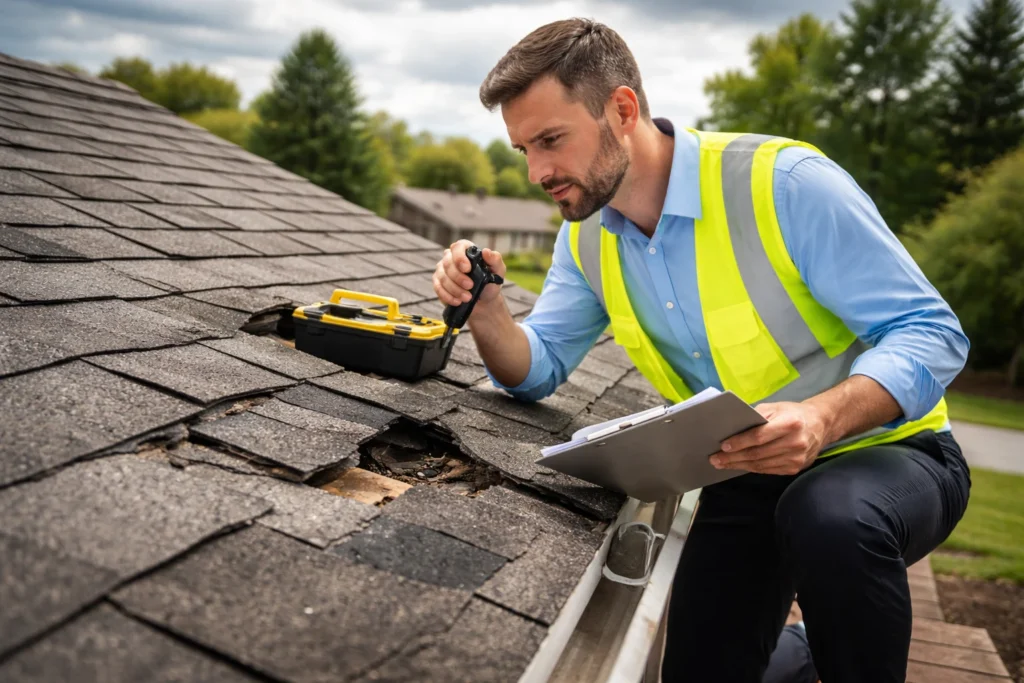
Roof damage is stressful. It’s disruptive. And it’s expensive. That’s exactly why working with a roof damage public adjuster can make the difference between a frustrating payout and a fully funded restoration.
In Cedar Hill, storms aren’t rare events. Hail hits hard. Wind rolls through unexpectedly. Summer heat bakes shingles for months at a time. When your roof takes a hit, your insurance policy is supposed to protect you. But here’s the truth: insurance companies are businesses. Their job is to manage payouts. Yours is to protect your property and your investment. A roof damage public adjuster exists to level that field.
Let’s break this down clearly and practically.
Understanding Roof Damage in Cedar Hill
Roof damage doesn’t always announce itself with a dramatic hole in the ceiling. Sometimes it hides quietly. Sometimes it waits.
Common Causes of Roof Damage
In Cedar Hill and across North Texas, the most frequent causes include:
- Hailstorms – Even quarter-sized hail can fracture shingles.
- High winds – Lifting, creasing, or tearing shingles.
- Falling debris – Tree limbs after storms.
- Extreme heat – Accelerated aging and cracking.
- Heavy rain – Water intrusion through compromised flashing.
Texas weather is intense. That intensity shortens roof lifespans.
Signs Your Roof May Be Damaged
You might notice:
- Missing or curled shingles
- Granules collecting in gutters
- Ceiling stains or soft drywall
- Increased energy bills
- Mold smells in the attic
Here’s the problem. Insurance adjusters sometimes inspect quickly and look for obvious damage only. Hidden structural issues beneath shingles? Overlooked. Code upgrades? Not always included. That’s where a roof damage public adjuster brings value.
What Is a Roof Damage Public Adjuster?
A roof damage public adjuster is a licensed insurance claims professional who represents you — not the insurance company.
That distinction matters.
There are three types of adjusters involved in most claims:
| Type of Adjuster | Who They Work For | Primary Goal |
| Insurance Company Adjuster | Insurance carrier | Protect company interests |
| Independent Adjuster | Contracted by carrier | Evaluate claim for insurer |
| Public Adjuster | Homeowner/business owner | Maximize policyholder payout |
A roofing contractor can identify damage. They can repair or replace. But they cannot legally negotiate your insurance settlement on your behalf in Texas.
A roof damage public adjuster can.
When Should You Hire a Roof Damage Public Adjuster?
Timing is everything.
You don’t need to wait for a denial. In fact, waiting often costs you leverage.
Consider hiring one when:
- After a major hailstorm hits Cedar Hill
- Your claim settlement feels low
- Your claim was partially denied
- You’re overwhelmed by policy language
- Your roof is older and insurer claims “wear and tear”
The earlier a roof damage public adjuster gets involved, the better the documentation and negotiation strategy.
The Roof Damage Insurance Claim Process — Simplified
Let’s walk through what actually happens.
Step 1: Independent Inspection
A detailed inspection includes:
- Shingle lift tests
- Impact pattern mapping
- Flashing and vent analysis
- Interior moisture checks
Some public adjusters use drones and thermal imaging. That’s not overkill. That’s precision.
Step 2: Policy Review
Insurance policies are contracts. Complex ones.
A roof damage public adjuster reviews:
- Replacement Cost vs Actual Cash Value
- Deductibles
- Code upgrade coverage
- Exclusions
Many homeowners don’t realize they have ordinance and law coverage that pays for code-required upgrades. That detail alone can add thousands to a settlement.
Step 3: Documentation and Estimating
Thorough documentation includes:
- High-resolution photos
- Line-item Xactimate estimates
- Engineering opinions if necessary
- Weather data reports
This isn’t guesswork. It’s structured claim building.
Step 4: Negotiation
Insurance companies respond to data. Not emotion.
Your roof damage public adjuster negotiates based on:
- Measurable damage
- Policy language
- Local building requirements
- Market material costs
Step 5: Settlement
Once agreed, funds are released based on policy structure.
Simple. But only if done properly.
Why Roof Claims Are Frequently Underpaid
Here’s where most homeowners get blindsided.
1. Depreciation
If your roof is 12 years old, carriers may heavily depreciate it under an Actual Cash Value policy. That reduces your upfront payout dramatically.
2. Repair vs Replace Disputes
Insurers may argue for “spot repairs.” But matching shingles is often impossible. Cedar Hill homes in HOAs may require uniform appearance.
3. Code Upgrades
Texas building codes evolve. If decking spacing or underlayment must be upgraded, your policy may cover it — but only if properly documented.
4. Surface Inspections Only
Quick inspections miss compromised underlayment or decking.
A roof damage public adjuster ensures nothing gets ignored.
Benefits of Hiring a Roof Damage Public Adjuster in Cedar Hill
Let’s talk results.
Clear Advantages
- Stronger claim documentation
- Professional negotiation
- Reduced stress
- Faster resolution
- Potentially higher settlements
Many homeowners attempt to manage claims themselves. I understand that instinct. But when you’re juggling work, family, and contractor scheduling, insurance negotiation becomes exhausting fast.
Having a roof damage public adjuster shifts that burden.
How Roof Damage Is Properly Evaluated
A professional evaluation goes deeper than a ladder and a clipboard.
Advanced Techniques Include:
- Drone imaging for slope-wide impact patterns
- Moisture meters in attic insulation
- Chalk testing for hail bruising
- Core sampling in flat roof systems
This level of detail changes negotiation conversations.
Insurance companies operate on documentation. Strong documentation drives stronger outcomes.
Commercial Roof Damage Claims
Commercial properties are even more complex.
Flat roofs like:
- TPO
- EPDM
- Modified bitumen
require specialized assessment.
Business interruption coverage adds another layer. If a roof leak disrupts operations, lost income may be recoverable.
A roof damage public adjuster experienced in commercial claims can:
- Coordinate engineers
- Quantify business losses
- Challenge low-ball offers
- Ensure full scope inclusion
The financial stakes are higher. So is the strategy.
Common Mistakes Homeowners Make After Roof Damage
Avoid these at all costs:
- Waiting months to file
- Accepting the first offer
- Starting repairs without documentation
- Failing to read the policy
- Assuming the insurance adjuster is neutral
They aren’t. They represent the carrier.
You represent yourself — unless you hire a roof damage public adjuster.
Understanding Public Adjuster Fees
Transparency matters.
Most public adjusters work on a contingency basis. That means:
- No upfront fee
- Percentage of final settlement
- Fee only applies if you receive funds
This aligns incentives. If your adjuster doesn’t increase or secure your payout, they don’t get paid.
In many cases, the increased settlement outweighs the fee significantly.
A Cedar Hill Example Scenario
Let’s walk through a realistic situation.
A Cedar Hill homeowner files a hail claim. Insurance offers $13,200 for partial repair.
Homeowner feels uneasy.
A roof damage public adjuster conducts a detailed inspection and finds:
- Shingle mat fractures across multiple slopes
- Code-required underlayment upgrades
- Vent flashing damage
- Gutter impact damage
Revised documented estimate: $27,850.
After negotiation, final settlement lands at $25,600.
That’s not a guarantee in every case. But it demonstrates what thorough documentation can reveal.
Choosing the Right Roof Damage Public Adjuster
Not all adjusters are equal.
Here’s what to look for:
Credentials
- Licensed in Texas
- In good standing with state regulators
- Bonded
Experience
- Familiar with Cedar Hill storm patterns
- Knowledge of local building codes
- Experience with your roof type
Communication
- Clear fee explanation
- Detailed inspection process
- Transparent updates
Ask direct questions. Good professionals welcome them.
Why Local Experience Matters in Cedar Hill
Cedar Hill isn’t just “another Texas city.”
It has:
- Hail corridors
- Mixed roofing ages
- HOA neighborhoods
- Heat-intense summers
Local knowledge strengthens claims.
A roof damage public adjuster familiar with Cedar Hill understands how insurers respond to regional storm events. That insight helps anticipate objections before they arise.
Final Thoughts: Protect Your Roof, Protect Your Investment
Your roof protects everything beneath it. Structure. Belongings. Memories. Business assets.
When damage occurs, you deserve full policy benefits. Not partial. Not rushed. And not undervalued.
A roof damage public adjuster doesn’t create coverage that doesn’t exist. They uncover the coverage already written into your policy. They document thoroughly. And they negotiate firmly. They reduce stress.
And in a place like Cedar Hill, where storms are part of life, that representation can make all the difference.
If your roof has been damaged, don’t rely on a single inspection. Don’t assume the first number is final. Get clarity. Get documentation. And consider whether a roof damage public adjuster should be part of your strategy.
Because when it comes to protecting your home, precision matters.
FAQs
A roof damage public adjuster represents you in the insurance claim process, handling inspections, documentation, and negotiations with the insurer.
You should consider hiring one after significant storm damage, if your claim is denied, or if the settlement offer seems too low.
The insurance adjuster works for the carrier, while a public adjuster works exclusively for you.
Most public adjusters work on a contingency fee basis, meaning they’re paid a percentage of the final settlement.
No, roofing contractors cannot legally negotiate insurance settlements; only licensed adjusters can represent you in that capacity.
In many cases, it can actually streamline the process by improving documentation and reducing back-and-forth disputes.
Yes, if additional damage or overlooked items are discovered, they may help reopen and supplement the claim.
You can still consult a public adjuster to review the offer and determine if additional compensation is justified.
Yes, roof damage public adjusters in Texas must be licensed and regulated by the state.
For many homeowners, the increased settlement and reduced stress make it a valuable investment.